







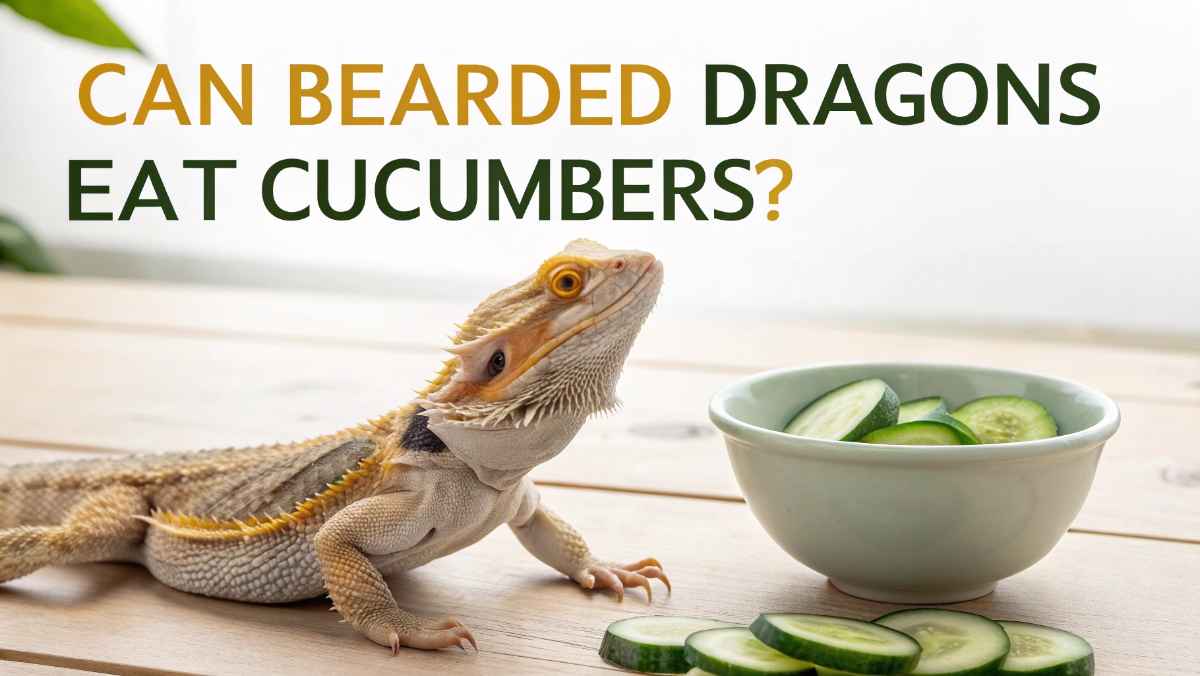
Yes, bearded dragons can eat cucumbers, but only in small amounts. Cucumbers are not toxic, and they will not harm your bearded dragon when prepared the right way. However, cucumbers should never be a main food. They are mostly water and do not give enough nutrients that your bearded dragon needs every day.
Many owners like cucumbers because they look fresh and healthy. Bearded dragons also enjoy the crunch. Still, feeding cucumbers too often can cause problems. In this guide, you will learn when cucumbers are safe, how often to feed them, how to prepare them, and what foods are better choices.
Are Cucumbers Safe for Bearded Dragons?
Cucumbers are safe for bearded dragons when fed correctly. They do not contain poison or harmful chemicals that affect reptiles. If your bearded dragon eats a small piece once in a while, there is no danger.
The problem is not safety, but nutrition. Cucumbers do not provide enough calcium, vitamins, or energy. Bearded dragons need strong bones, good digestion, and proper growth. Cucumbers cannot support these needs on their own.
That is why cucumbers should only be an occasional treat, not a daily food.
Nutritional Value of Cucumbers for Bearded Dragons
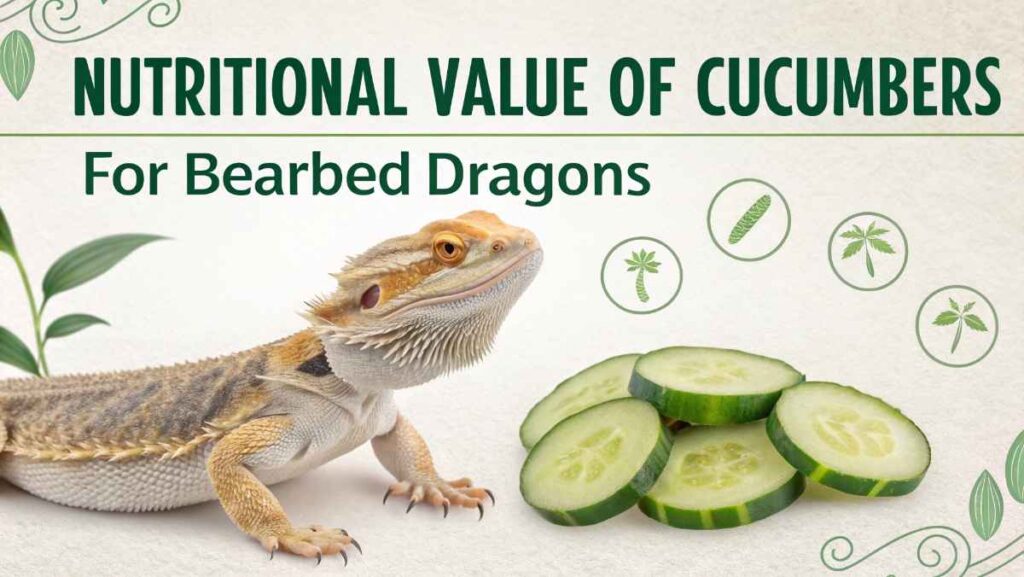
Cucumbers are made of about 95 percent water. This means they are very low in calories and nutrients.
Here is what cucumbers offer in small amounts:
- Water – helps with hydration
- Fiber – supports digestion slightly
- Vitamin C – helps the immune system
- Vitamin K – supports blood health
- Potassium – helps muscle function
Even though this looks good, the amounts are very small. Cucumbers also have more phosphorus than calcium. Bearded dragons need more calcium than phosphorus, so this balance is not ideal.
Because of this, cucumbers should never replace leafy greens or other healthy vegetables.
Benefits of Feeding Cucumbers
Even though cucumbers are not very nutritious, they still have a few benefits when used the right way.
Helps With Hydration
Cucumbers contain a lot of water. If your bearded dragon does not drink much or seems a little dry, small cucumber pieces can help add moisture.
Easy to Chew
When peeled and cut small, cucumbers are soft and easy to eat. This can be helpful for older bearded dragons.
Adds Variety
Bearded dragons enjoy different textures and tastes. Cucumbers can make meals more interesting when mixed with better vegetables.
Low Fat and Sugar
Cucumbers do not contain much sugar or fat, which makes them safer than many fruits.
Risks of Feeding Cucumbers
Feeding too much cucumber can cause problems. It is important to understand these risks before adding cucumbers to your bearded dragon’s diet.
Poor Calcium Balance
Cucumbers have a low calcium-to-phosphorus ratio. Too much phosphorus can block calcium absorption. This can lead to weak bones over time.
Diarrhea
Because cucumbers are mostly water, feeding too much can cause loose stools. Diarrhea can lead to dehydration and weakness.
Low Nutrition
If cucumbers take up too much space in the diet, your bearded dragon may miss important nutrients from better foods.
False Feeling of Fullness
Cucumbers fill the stomach with water but do not provide energy. Your bearded dragon may eat less of the foods it really needs.
How Often Can Bearded Dragons Eat Cucumbers?
Cucumbers should be fed rarely. Think of them as a treat, not a regular meal item.
Adult Bearded Dragons
Adult bearded dragons can eat cucumber once a week or once every two weeks. The portion should be small and mixed with leafy greens.
Baby Bearded Dragons
Baby bearded dragons need a lot of protein and calcium for growth. Cucumbers are not helpful for this stage. It is best to avoid cucumbers or offer a tiny piece very rarely.
How to Prepare Cucumbers for Bearded Dragons
Proper preparation makes cucumbers safer and easier to digest.
Step 1: Wash the Cucumber
Always wash cucumbers with clean water. This removes dirt and possible chemicals.
Step 2: Peel the Skin
Cucumber skin is hard to digest and may contain chemicals. Peeling makes it safer.
Step 3: Remove the Seeds
Large seeds can be a choking risk. Removing them is a good habit.
Step 4: Cut Into Small Pieces
Cut the cucumber into small, bite-sized pieces. This prevents choking and makes eating easier.
Step 5: Mix With Other Vegetables
Never serve cucumbers alone. Mix them with calcium-rich greens for balance.
Can Bearded Dragons Eat Cucumber Skin?
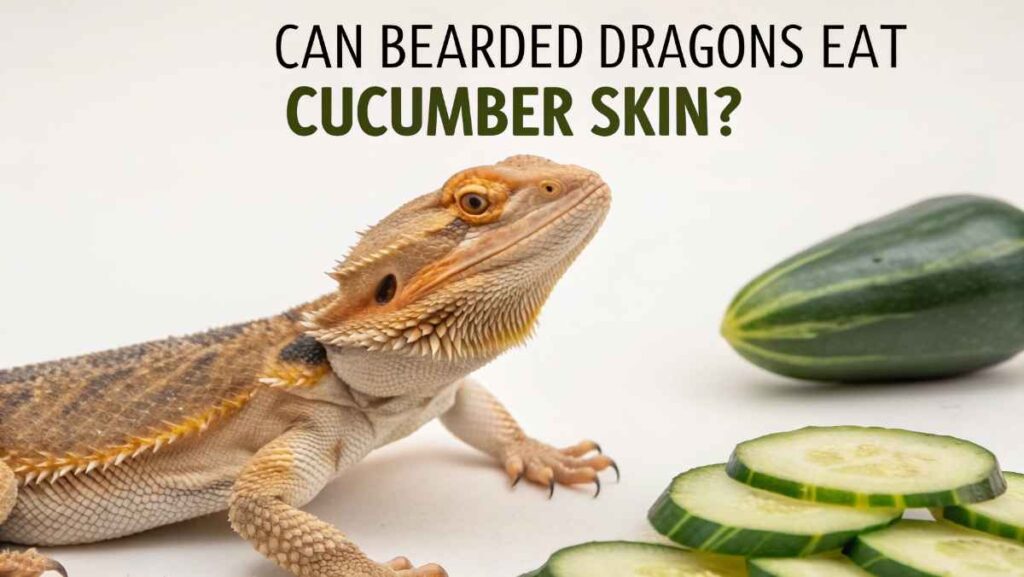
Cucumber skin is not toxic, but it is not recommended. The skin is tough and harder to digest. It can also hold chemicals from farming.
Peeling the cucumber is the safest option. Your bearded dragon will digest it better and reduce the risk of stomach issues.
Can Bearded Dragons Eat Cucumber Seeds?
Small, soft seeds are usually not dangerous, but large seeds can cause choking. Seeds also add no nutrition.
It is best to remove seeds before feeding cucumbers. This simple step makes feeding safer.
Can Bearded Dragons Eat Cucumbers Everyday?
No, bearded dragons should not eat cucumbers every day. Cucumbers are mostly water and low in nutrients. Daily feeding can cause diarrhea and reduce calcium intake. Cucumbers are best as an occasional treat, mixed with healthy leafy greens, not as a regular food.
Can Bearded Dragons Eat Tomatoes?
Bearded dragons can eat tomatoes, but only rarely. Tomatoes are acidic and can upset their stomach if fed too often. Remove seeds and skin before feeding. Offer very small pieces as a treat, not a regular food.
Can Bearded Dragons Eat Carrots?
Yes, bearded dragons can eat carrots in moderation. Carrots are safe and provide vitamins, but they are high in sugar. Grate or chop them into small pieces. Feed carrots occasionally, mixed with leafy greens, not every day.
Can Bearded Dragons Eat Broccoli?
Bearded dragons can eat broccoli, but only in small amounts. Broccoli contains goitrogens that may affect thyroid health if overfed. Chop it finely and serve rarely. It should never replace calcium-rich greens in their regular diet.
Can Bearded Dragons Eat Bananas?
Yes, bearded dragons can eat bananas as an occasional treat. Bananas are high in sugar and low in calcium. Too much can cause health problems. Offer small slices once in a while, not often, and never as a main food.
Best Vegetables to Feed Instead of Cucumbers
Cucumbers should never be a main food. These vegetables are much better choices and should be fed more often.
Leafy Greens (Staple Foods)
- Collard greens
- Mustard greens
- Turnip greens
- Dandelion greens
These greens are high in calcium and fiber. They support bone health and digestion.
Other Healthy Vegetables
- Butternut squash
- Acorn squash
- Bell peppers
- Green beans
These vegetables add vitamins and variety while offering better nutrition than cucumbers.
Signs Your Bearded Dragon Ate Too Much Cucumber
Watch your bearded dragon after feeding cucumber. These signs may show overfeeding:
- Watery or runny poop
- Less energy
- Reduced appetite
- Slight bloating
If you notice these signs, stop feeding cucumber and focus on leafy greens and insects. If symptoms continue, consult a reptile expert.
Expert Advice on Feeding Cucumbers
Experienced keepers agree that balance is key. Bearded dragons stay healthy when they eat a wide variety of foods, with a strong focus on calcium-rich vegetables and proper insects.
Cucumbers can be used as a small hydration boost or an occasional treat, but they should never replace staple foods. A varied diet helps prevent health problems and keeps your bearded dragon active and alert.
Frequently Asked Questions
Can bearded dragons eat raw cucumber?
Yes, bearded dragons can eat raw cucumber sometimes. It should be peeled, deseeded, and given rarely because it is mostly water and low nutrients.
What vegetables are toxic for bearded dragons?
Vegetables like onion, garlic, rhubarb, avocado, and mushrooms are toxic. These foods can cause serious health problems and should never be fed.
What vegetables are best for bearded dragons?
The best vegetables are collard greens, mustard greens, turnip greens, dandelion greens, and squash. These provide calcium, fiber, and important vitamins.
What is the most common cause of death in bearded dragons?
The most common cause is poor care, including wrong temperatures, weak lighting, and bad diet. These problems slowly damage health over time.
What should bearded dragons never eat?
Bearded dragons should never eat avocado, chocolate, dairy, junk food, insects from outside, or foods with salt, sugar, or seasoning.
What types of vegetables do bearded dragons eat?
Bearded dragons eat leafy greens, soft vegetables, and squash. Their diet should focus on calcium-rich greens with other vegetables added for variety.
What is a bearded dragon’s favorite snack?
Many bearded dragons enjoy insects like dubia roaches and crickets. Some also like small fruit pieces, but fruits should only be treats.
Can beardies eat scrambled eggs?
Yes, beardies can eat plain scrambled eggs sometimes. Eggs should be fully cooked, unseasoned, and offered rarely as a protein treat.
What is the healthiest thing to feed your bearded dragon?
A healthy diet includes leafy greens daily, proper insects, calcium supplements, and fresh vegetables. Balance and variety are the keys to good health.
What fruits are not good for bearded dragons?
Fruits like citrus, grapes, and very sugary fruits are not good. Too much fruit can cause diarrhea and calcium imbalance in bearded dragons.
Conclusion
Bearded dragons can eat cucumbers, but only in moderation. Cucumbers are safe, non-toxic, and refreshing, but they do not provide the nutrients your bearded dragon needs every day. Too much cucumber can lead to diarrhea, poor calcium intake, and weak health over time.
The best approach is to use cucumbers as a small treat mixed with healthy greens. Focus on leafy vegetables, proper insects, and a balanced diet. When fed wisely, cucumbers can be a safe and enjoyable addition without harming your bearded dragon’s health.