








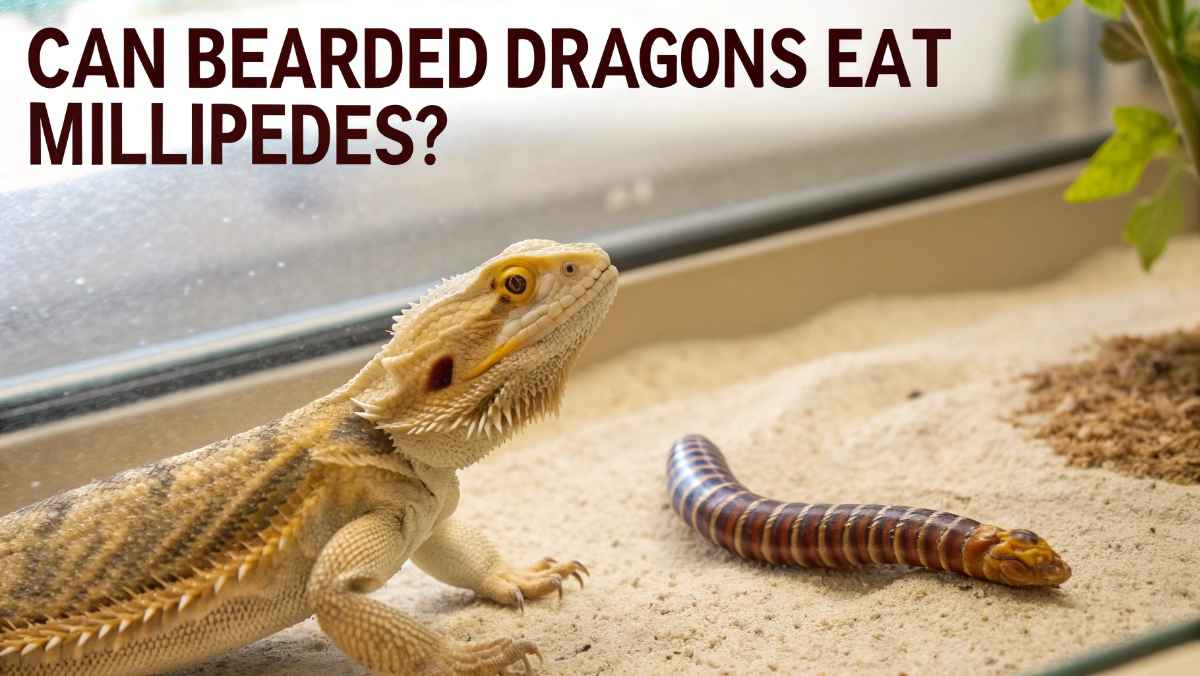
Bearded dragons are curious reptiles. They love to chase moving insects, and sometimes they try to eat bugs they should not.
Bearded dragons should not eat millipedes. Millipedes are toxic and unsafe, even if freshly dead, and can cause serious health problems.
This article explains why millipedes are dangerous, what to do if your dragon eats one by accident, and which insects are safe instead.
Can Bearded Dragons Eat Millipedes? (Direct Answer)
No, bearded dragons should not eat millipedes.
Millipedes release harmful chemicals when they feel scared or attacked. These chemicals can upset your dragon’s stomach and may be toxic. Even one millipede can cause problems, so it is best to keep them away from your pet at all times.
Why Millipedes Are Dangerous for Bearded Dragons
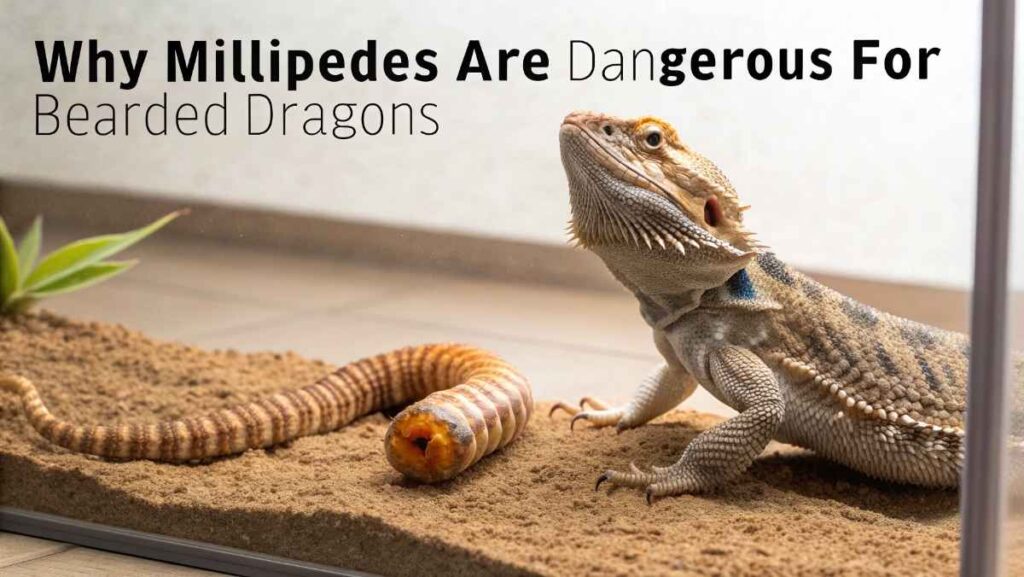
Millipedes may look harmless, but they have natural defenses that make them unsafe for reptiles.
Toxic Defensive Chemicals
When millipedes are threatened, they release strong chemicals from their bodies. These chemicals are meant to protect them from predators. For a bearded dragon, these toxins can cause mouth irritation, stomach pain, and other health issues.
Some millipedes release substances that smell bad and taste bitter. This alone can make your dragon uncomfortable.
Digestive Problems
Bearded dragons have sensitive digestive systems. Millipedes have hard bodies and defensive fluids that are difficult to digest. Eating one can lead to:
- Upset stomach
- Diarrhea
- Vomiting
- Loss of appetite
In severe cases, digestion may stop completely, which is dangerous.
Parasites and Pesticides
Most millipedes are found outdoors. Wild insects often carry parasites, bacteria, or chemicals from soil and plants. If a bearded dragon eats a wild millipede, it may also swallow harmful germs or pesticide residue.
Are Millipedes Poisonous to Bearded Dragons?
Yes, millipedes can be poisonous to bearded dragons.
Not all millipedes are deadly, but many release toxic fluids as a defense. These fluids can burn the mouth or throat and irritate the stomach. Some dragons may show mild signs, while others may get very sick.
Because you cannot tell which millipedes are more toxic, all millipedes should be treated as unsafe.
What Happens If a Bearded Dragon Eats a Millipede?
Sometimes accidents happen. A dragon may catch a millipede before you notice.
Possible Symptoms to Watch For
After eating a millipede, your bearded dragon may show:
- Lethargy or weakness
- Refusing food
- Drooling or mouth irritation
- Diarrhea
- Vomiting
- Dark or runny stools
Symptoms can appear within a few hours or later the same day.
When to Contact a Vet
If your dragon shows any unusual behavior after eating a millipede, contact a reptile vet as soon as possible. Quick action can prevent serious problems.
If your dragon eats more than one millipede, seek help immediately, even if no symptoms appear yet.
Are Centipedes Safe for Bearded Dragons?
No, centipedes are even more dangerous than millipedes.
Centipedes have venom and can bite. Their venom can cause serious reactions in reptiles. A centipede bite or ingestion can lead to swelling, pain, or severe illness.
Never allow your bearded dragon near centipedes.
Can Baby Bearded Dragons Eat Millipedes?
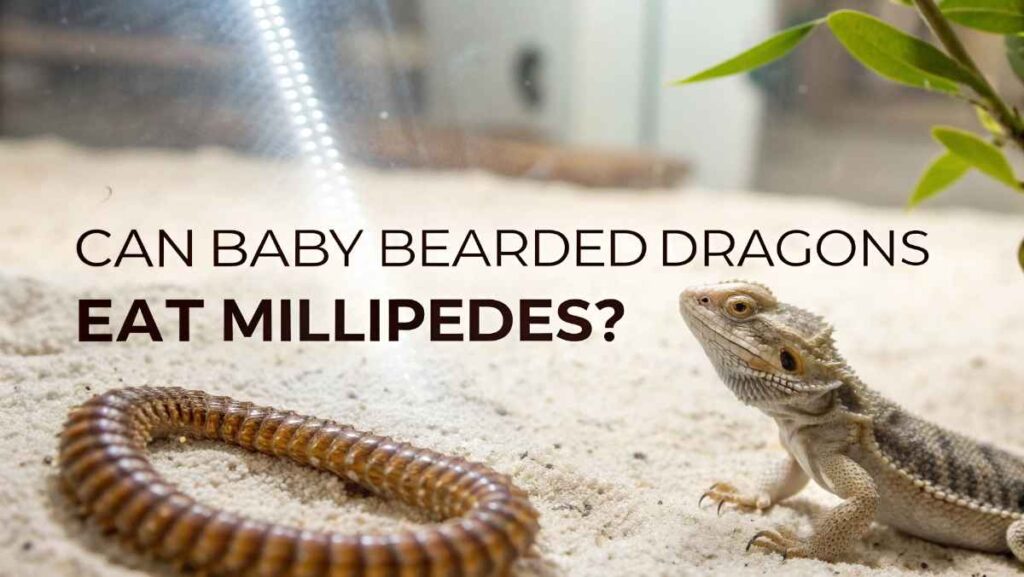
Baby bearded dragons should never eat millipedes. Young dragons are much smaller and weaker. Their bodies cannot handle toxins or hard insects. Even a tiny millipede can cause serious harm to a baby bearded dragon.
Juveniles need soft, safe insects that are easy to digest.
Why Wild Insects Are Unsafe for Bearded Dragons
Many owners think wild bugs are natural food. This is not true for pet bearded dragons.
Wild insects can:
- Carry parasites
- Contain harmful bacteria
- Be exposed to pesticides
- Be toxic or venomous
Even if an insect looks harmless, it may still be dangerous. Only feed insects that are raised specifically as reptile food.
Safe Insects Bearded Dragons Can Eat Instead
There are many safe and healthy insects that bearded dragons enjoy.
Staple Feeder Insects
These insects are good for regular feeding:
- Crickets
- Dubia roaches
- Black soldier fly larvae
- Silkworms
They provide protein and are easy to digest.
Occasional Treat Insects
These should be fed in small amounts:
- Mealworms
- Superworms
- Waxworms
They are higher in fat and should not be daily food.
Always choose insects that are the right size. A good rule is that the insect should be no longer than the space between your dragon’s eyes.
What to Do If Your Bearded Dragon Ate a Millipede
If your dragon eats a millipede, stay calm and act quickly.
Step-by-Step Actions
- Remove any remaining millipedes from the enclosure
- Watch your dragon closely for the next 24 hours
- Offer fresh water
- Do not force food
- Contact a reptile vet if symptoms appear
Do not try home remedies. Professional care is the safest option.
How to Prevent Accidental Insect Eating
Prevention is the best way to protect your dragon.
Enclosure Safety Tips
- Keep the tank clean
- Remove uneaten insects daily
- Use proper substrate
Outdoor Handling Advice
- Do not place your dragon on the ground outside
- Watch closely during outdoor time
- Avoid grassy or damp areas
Habitat Cleaning
- Check decorations and hides
- Clean regularly
- Seal windows and doors to stop insects from entering
Can Bearded Dragons Eat Centipedes
No, bearded dragons should not eat centipedes. Centipedes are venomous and can bite or sting. Their venom may cause pain, swelling, sickness, or serious health problems. Eating centipedes is risky and unsafe for bearded dragons.
Do Lizards Eat Centipedes
Some wild lizards may eat centipedes, but it is dangerous. Centipedes have venom and strong bites. Many lizards get injured or sick after eating them. Pet lizards should never be fed centipedes because they are unsafe food.
Frequently Asked Questions (FAQs)
What insects can bearded dragons not eat?
Bearded dragons should not eat millipedes, centipedes, fireflies, ants, beetles, spiders, scorpions, or any wild insects that may carry toxins, venom, parasites, or pesticides inside.
Can my bearded dragon eat centipedes?
No, bearded dragons should never eat centipedes because they are venomous, can bite, cause pain, swelling, sickness, and may lead to serious health problems later.
What is a bearded dragon’s favorite bug?
Most bearded dragons love dubia roaches because they move slowly, taste good, are easy to digest, and provide healthy protein for daily feeding needs naturally.
What is the most common cause of death in bearded dragons?
Poor husbandry is the most common cause of death, including wrong temperatures, weak lighting, bad diet, dehydration, and untreated illness over long periods of time.
Will lizards eat millipedes?
Some wild lizards may eat millipedes, but many avoid them because millipedes release bad tasting, toxic chemicals that can cause sickness and serious health problems.
What insects are poisonous to bearded dragons?
Poisonous insects include millipedes, centipedes, fireflies, ants, spiders, scorpions, beetles, and most wild bugs that release toxins or venom into their bodies when threatened naturally.
Are millipedes poisonous to eat?
Yes, millipedes are poisonous to eat because they release defensive chemicals that can burn mouths, upset stomachs, and cause illness in many animals and reptiles.
What eats millipedes?
Millipedes are eaten by some birds, frogs, small mammals, reptiles, and insects that are resistant to their toxic defensive chemicals found in natural outdoor habitats.
What wild insects can I feed my bearded dragon?
Wild insects should not be fed because they may carry parasites, pesticides, or toxins, making them unsafe for bearded dragons in captivity at any time.
Are millipedes bad for terrariums?
Yes, millipedes are bad for terrariums because they can release toxins, hide in substrate, and pose health risks to reptiles kept inside enclosed living spaces.
Final Verdict
Bearded dragons should never eat millipedes. Millipedes release harmful chemicals, are hard to digest, and may carry parasites. Even one millipede can make your dragon sick. Always choose safe feeder insects and keep wild bugs away from your pet.
A proper diet keeps your bearded dragon healthy, active, and happy for years to come.