









Many bearded dragon owners ask simple food questions because they want to keep their pets safe and healthy. Cilantro is a common herb found in many kitchens, so it is natural to wonder if it can be shared with your bearded dragon. The short answer is yes, bearded dragons can have cilantro, but only in small amounts. It should never be the main food in their diet.
This guide explains everything you need to know about feeding cilantro to bearded dragons. You will learn if it is safe, how often to feed it, how to prepare it, and what risks to avoid. The goal is to help you feed your pet with confidence and care.
Can Bearded Dragons Have Cilantro? (Quick Answer)
Yes, bearded dragons can eat cilantro. It is not toxic and is safe when given in moderation. Cilantro should be treated as an occasional food, not a daily staple.
Is Cilantro Safe for Bearded Dragons?
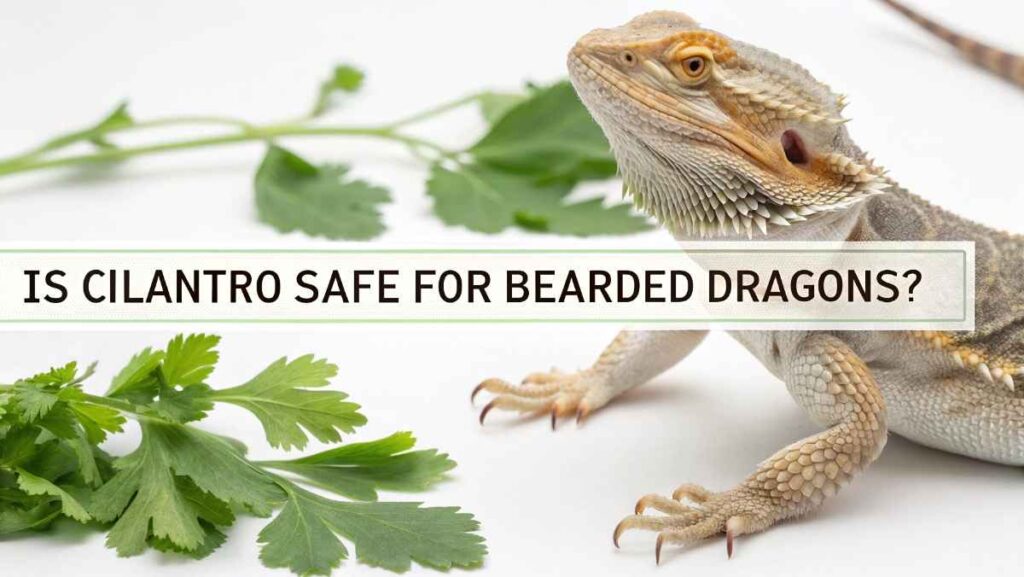
Cilantro is safe for bearded dragons when fed properly. It does not contain any known toxins that harm them. Many dragons enjoy the smell and taste, which makes it a good way to add variety to their meals.
Problems only happen when cilantro is fed too often or in large amounts. Like many herbs, it has a high water content and contains compounds that can interfere with calcium use if overfed. This is why moderation is very important.
When offered the right way, cilantro is a safe and healthy addition to a mixed salad.
Nutritional Value of Cilantro for Bearded Dragons
Cilantro offers some useful nutrients, but it is not very strong nutritionally compared to staple greens.
What Cilantro Contains
- Vitamin A, which helps with vision and skin health
- Vitamin C, which supports the immune system
- Vitamin K, which plays a role in blood health
- Water, which helps with hydration
Cilantro also has a decent calcium-to-phosphorus ratio compared to many herbs. This is a good thing, since bearded dragons need more calcium than phosphorus.
What Cilantro Lacks
Cilantro is low in calories and does not provide enough minerals or fiber to support daily feeding. It should not replace stronger greens like collard greens, mustard greens, or dandelion greens.
Health Benefits of Cilantro for Bearded Dragons
When used correctly, cilantro can support your bearded dragon’s health in small ways.
Adds Variety
Eating the same food every day can make dragons bored. Cilantro adds a fresh smell and taste that may encourage picky eaters to eat their greens.
Supports Hydration
Cilantro has a high water content. This can help keep your dragon hydrated, especially if they do not drink from a water bowl often.
Light Nutrient Boost
The vitamins in cilantro help support the immune system and general wellness, even though the amounts are small.
Risks of Feeding Too Much Cilantro
Even safe foods can become harmful when overused. Cilantro is no exception.
Digestive Problems
Too much cilantro can cause loose stools or diarrhea because of its high water content.
Calcium Absorption Issues
Cilantro contains oxalates. These compounds can bind to calcium and make it harder for the body to use it. Over time, this may increase the risk of bone problems if the diet is not balanced.
Poor Diet Balance
If cilantro replaces stronger greens too often, your bearded dragon may miss out on important nutrients needed for growth and bone health.
How Often Can Bearded Dragons Eat Cilantro?
Cilantro should be fed occasionally.
For Adult Bearded Dragons
- 1–2 small leaves
- Once or twice per week
- Mixed with other greens
For Baby and Juvenile Bearded Dragons
- Very small amounts only
- Once a week or less
- Always mixed with staple greens
Young dragons need more protein and calcium-rich foods. Cilantro should never be a main food for them.
How to Prepare Cilantro for Bearded Dragons
Proper preparation is just as important as choosing safe foods.
Step 1: Wash Thoroughly
Rinse cilantro under clean running water to remove dirt, pesticides, and chemicals.
Step 2: Remove Damaged Parts
Throw away wilted, slimy, or yellow leaves.
Step 3: Chop into Small Pieces
Cut cilantro into small pieces that are easy to chew. Pieces should be smaller than the width of your dragon’s head.
Step 4: Serve Raw
Do not cook cilantro. Cooking removes nutrients and changes the texture.
Step 5: Mix with Other Greens
Always combine cilantro with stronger leafy greens to create a balanced salad.
Best Greens to Mix with Cilantro
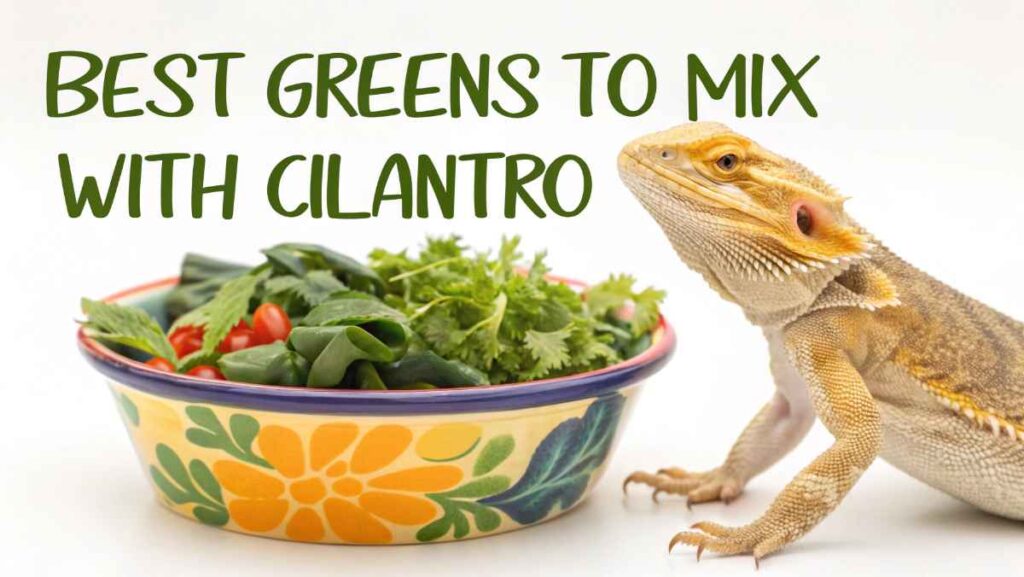
Cilantro works best when paired with staple greens. Good options include:
- Collard greens
- Mustard greens
- Turnip greens
- Dandelion greens
- Endive
Mixing foods improves nutrition and lowers the risk of overfeeding any one item.
Can Baby Bearded Dragons Have Cilantro?
Yes, baby bearded dragons can have cilantro, but only in very small amounts.
Baby dragons need more insects and calcium-rich foods to support growth. Greens are still important, but cilantro should only be a small part of the salad. Feeding too much cilantro to a baby dragon may cause stomach upset or reduce calcium intake.
Can Bearded Dragons Eat Cilantro Stems?
Cilantro stems are not toxic, but they are tougher and harder to chew. Thin stems can be offered occasionally if chopped very small. Thick stems should be avoided because they may cause choking or be hard to digest.
Leaves are the safer and better choice.
Cilantro vs Other Herbs for Bearded Dragons
Not all herbs are the same. Here is how cilantro compares to other common herbs.
Cilantro vs Parsley
Parsley is higher in oxalates and should be fed less often than cilantro. Cilantro is the safer choice.
Cilantro vs Basil
Basil is safe and aromatic but should also be fed in moderation. Both are occasional treats.
Cilantro vs Mint
Mint is safe in tiny amounts but can be strong and irritating if overfed. Cilantro is gentler.
Overall, cilantro is one of the better herbs when used properly.
What to Do If Your Bearded Dragon Eats Too Much Cilantro
If your bearded dragon eats too much cilantro, watch for these signs:
- Loose stools
- Reduced appetite
- Lethargy
What You Should Do
- Stop feeding cilantro for a week
- Offer staple greens only
- Make sure calcium supplements are used
If symptoms last more than a day or worsen, contact a reptile veterinarian.
Common Feeding Mistakes to Avoid
- Feeding cilantro every day
- Using cilantro as a main green
- Not washing herbs before feeding
- Offering large pieces
- Ignoring calcium balance
Avoiding these mistakes helps keep your bearded dragon healthy.
Can Bearded Dragons Have Cilantro Leaves
Yes, bearded dragons can have cilantro leaves safely. The leaves are soft, easy to chew, and non-toxic. Feed small amounts only, mixed with other leafy greens, to avoid stomach upset and keep the diet balanced.
Can Bearded Dragons Have Cilantro Everyday
No, bearded dragons should not eat cilantro every day. Cilantro has a lot of water and oxalates, which can affect digestion and calcium use. It is best fed once or twice a week as a small treat.
Can Bearded Dragons Have Cilantro Seeds
No, cilantro seeds are not recommended for bearded dragons. They are hard, dry, and difficult to digest. Seeds can cause choking or digestive problems, so only the fresh cilantro leaves should be offered in small amounts.
Can Bearded Dragons Eat Parsley
Yes, bearded dragons can eat parsley, but only rarely. Parsley contains oxalates that may block calcium absorption if overfed. Use it as an occasional garnish, not a regular green, and always mix it with staple vegetables.
Can Bearded Dragons Have Kale
Yes, bearded dragons can eat kale, but not every day. Kale is nutritious but high in oxalates. Feeding it too often may affect calcium levels. Offer kale occasionally and rotate it with safer staple greens.
Can Bearded Dragons Eat Basil
Yes, basil is safe for bearded dragons in small amounts. It is non-toxic and smells appealing, which may help picky eaters. Basil should be fed occasionally, not daily, and mixed with other healthy leafy greens.
Can Bearded Dragons Have Dill
Yes, bearded dragons can have dill, but only in very small amounts. Dill has a strong flavor and should be treated as a rare herb. Too much dill may upset digestion, so mix it lightly with other greens.
Can Bearded Dragons Eat Mint
Yes, bearded dragons can eat mint, but only a tiny amount. Mint has a strong taste and smell that may irritate the stomach if overfed. Use mint rarely and never as a main part of their salad.
Frequently Asked Questions
Is it safe for bearded dragons to eat cilantro?
Yes, cilantro is safe for bearded dragons when fed in small amounts and mixed with other healthy leafy greens.
What herbs can bearded dragons not eat?
Bearded dragons should avoid chives, onions, garlic, leeks, and heavily seasoned herbs because they can be toxic.
What herbs are safe for bearded dragons?
Safe herbs include cilantro, basil, dill, parsley in moderation, oregano, and thyme when offered occasionally.
Is cilantro safe for reptiles?
Yes, cilantro is generally safe for reptiles when given in moderation as part of a balanced, varied diet.
What is toxic to a bearded dragon?
Toxic items include avocado, onion, garlic, rhubarb, fireflies, wild insects, pesticides, and toxic houseplants.
Is it okay to eat cilantro stems?
Cilantro stems are not toxic, but they are tough, so chop very small or feed leaves only.
How do I prepare cilantro for my dragon?
Wash cilantro well, remove damaged parts, chop into small pieces, and mix with other safe leafy greens.
What is the main cause of death of bearded dragons?
The main causes are poor diet, lack of UVB lighting, calcium deficiency, dehydration, and improper enclosure care.
What is the healthiest thing to feed your bearded dragon?
A healthy diet includes calcium-rich leafy greens, safe vegetables, live insects, proper supplements, and clean water.
What should beardies not eat?
Bearded dragons should not eat processed foods, dairy, sugary fruits, toxic plants, insects from outside, or human snacks.
Final Verdict
Bearded dragons can have cilantro safely, but only as an occasional treat. It provides hydration and light nutrition, but it is not strong enough to be a main food. Always feed cilantro in small amounts, mix it with staple greens, and avoid daily use. When balanced properly, cilantro can be a safe and enjoyable addition to your bearded dragon’s diet.
Also Read: