







Seeing your bearded dragon bask with its mouth open can feel confusing at first. Many owners worry something is wrong, but in most cases, this behavior is completely normal.
Bearded dragon basking with mouth open usually means it’s at the perfect temperature. It’s normal behavior, but constant open-mouth breathing can signal stress or illness.
In this article, you’ll discover why bearded dragons bask with their mouths open, what it means, and when it’s completely normal behavior.
Why Do Bearded Dragons Leave Their Mouth Open?
Bearded dragons are cold-blooded reptiles, which means they depend entirely on external heat to survive. Unlike mammals, they cannot regulate their body temperature internally. This makes basking one of the most important daily activities in their lives.
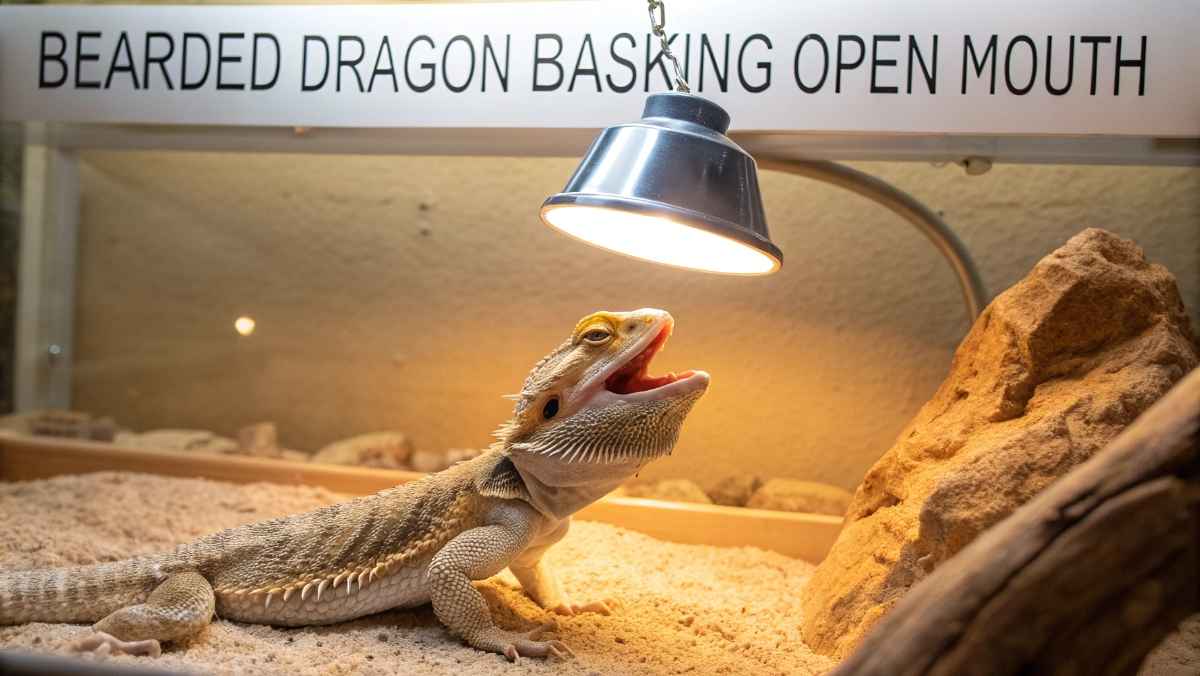
When a bearded dragon sits under its basking light and opens its mouth, it is doing something very smart.
It is releasing excess heat.
This behavior allows warm air to escape through the mouth, helping the dragon maintain a perfect internal temperature without overheating. Think of it like a natural cooling system.
This is not random behavior. It is an evolved survival mechanism that wild bearded dragons have used for thousands of years in the hot deserts of Australia.
A relaxed posture, calm eyes, and a still body while the mouth is open usually signal:
- Comfort
- Proper basking temperature
- A healthy digestion process
In fact, many experienced keepers see mouth-open basking as a sign of good husbandry.
If your beardie is basking confidently with its mouth open directly under the heat lamp, that is a positive sign, not a warning.
What Is Gaping In Bearded Dragons?
Gaping is the scientific and commonly accepted term for when a bearded dragon holds its mouth open for an extended period, especially while basking.
This behavior serves one primary purpose: thermoregulation.
Bearded dragons need their body temperature to sit within a narrow range to:
- Digest food properly
- Absorb nutrients
- Maintain immune strength
- Stay active and alert
When they bask, their internal temperature rises. Once it reaches the ideal range, they open their mouth to release excess heat while still enjoying the warmth.
Unlike humans, bearded dragons:
- Do not sweat
- Do not pant like dogs
- Do not regulate heat through skin
Their mouth is the only efficient heat-release outlet.
That is why gaping is:
- Normal
- Expected
- Beneficial
A bearded dragon that gapes under the basking lamp and then later moves to a cooler area is showing excellent self-regulation.
Gaping becomes concerning only when:
- It happens away from heat
- It continues all day
- It comes with other symptoms
On its own, gaping is not a problem. It is a sign of a reptile doing exactly what nature designed it to do.
Other Reasons a Beardie Leaves Its Mouth Open
While basking is the most common reason, it is not the only one. Some additional reasons are harmless, while others deserve attention.
Shedding Behavior
Young bearded dragons shed frequently. During shedding, they may:
- Open their mouth wide
- Puff out their beard
- Stretch their jaw
This helps loosen old skin, especially around the face. It looks dramatic but is completely safe and temporary.
Stress or Alert Response
A bearded dragon may briefly open its mouth if it feels:
- Threatened
- Startled
- Defensive
This is often paired with:
- Beard darkening
- Body flattening
- Hissing
Short, reactive mouth opening is normal. Constant stress, however, should be addressed.
Overheated Enclosure
If your beardie is gaping:
- On the cool side of the tank
- Inside the hide
- Away from the basking area
It may mean the entire enclosure is too hot.
Healthy daytime temperature ranges:
- Cool side: 75–85°F
- Basking spot: 88–100°F
- Night: 70–75°F
For baby bearded dragons, slightly warmer temperatures are often needed, but balance is critical.
Signs of overheating include:
- Constant gaping
- Hiding all day
- Spending excessive time in water
These signals mean adjustments are needed.
Bearded Dragon Respiratory Infection
While rare, a bearded dragon leaving its mouth open can sometimes indicate a respiratory infection.
This is not common in properly cared-for dragons, but it is important to recognize early signs.
Symptoms to Watch For
- Thick mucus around the mouth or nose
- Wheezing or clicking sounds
- Raspy breathing
- Lethargy
- Reduced appetite
Respiratory infections are often linked to:
- High humidity
- Poor ventilation
- Cold nighttime temperatures
Healthy humidity levels should remain between 20–40%.
If mouth-open breathing is paired with visible distress or breathing difficulty, veterinary care is the safest choice. Early treatment leads to excellent recovery outcomes.
The key difference is simple:
- Gaping while basking = healthy
- Open mouth breathing with distress = needs attention
What To Do If Your Beardie Is Gaping
In most cases, the answer is reassuringly simple.
Nothing at all.
If your bearded dragon:
- Is basking normally
- Has good appetite
- Is alert and active
- Shows no mucus or breathing issues
Then gaping is a positive behavior.
However, responsible keepers should still monitor conditions.
Smart Keeper Checklist
- Confirm basking temperature accuracy
- Use a reliable thermometer
- Maintain proper humidity
- Ensure a temperature gradient
- Provide shaded areas
Avoid:
- Under-tank heat mats
- Nighttime lights
- Excess humidity
If your beardie looks relaxed while gaping, enjoy the moment. Many owners consider it one of the most charming behaviors these reptiles display.
Sources and Further Reading
This article is written using widely accepted reptile husbandry principles supported by:
- Veterinary reptile care guidelines
- Academic research on thermoregulation
- Long-term breeder and keeper observations
Scientific studies on Pogona vitticeps consistently show that mouth-open basking is a natural and effective thermoregulation method.
The goal of this guide is to:
- Educate responsibly
- Reduce unnecessary fear
- Promote confident, informed care
Bearded Dragon Basking Open Mouth After Eating
After eating, bearded dragons bask to help digestion. Opening the mouth releases extra heat and keeps body temperature balanced. This is normal and shows your dragon is warm, relaxed, and digesting food properly under the basking light.
Bearded Dragon Open Mouth Not Basking
If your bearded dragon keeps its mouth open away from the basking area, the tank may be too hot, or it could be stressed. Check temperatures, humidity, and behavior. Occasional opening is fine, but constant behavior needs attention.
Juvenile Bearded Dragon Mouth Open
Juvenile bearded dragons often open their mouths more than adults because they need extra heat for growth. This is usually normal during basking. As long as the baby is active, eating well, and breathing normally, there’s little reason to worry.
Why Is My Bearded Dragon’s Mouth Open and Eyes Closed
A bearded dragon with mouth open and eyes closed is usually enjoying basking heat. It means the dragon feels safe, warm, and relaxed. This calm posture is common during rest and shows your beardie is comfortable in its environment.
Why Is My Bearded Dragon’s Mouth Slightly Open
A slightly open mouth often helps release small amounts of heat. It can also happen during relaxation or light basking. If there is no mucus, noise, or stress signs, this behavior is normal and not a health concern.
Bearded Dragon Mouth Open Tongue Out
When a bearded dragon opens its mouth and sticks out its tongue, it may be adjusting heat, shedding, or reacting to a smell. This behavior is usually brief and harmless unless paired with weakness, drooling, or breathing trouble.
Bearded Dragon Mouth Rot
Mouth rot is a serious infection that causes swelling, dark gums, pus, and pain. Unlike normal gaping, it does not happen only during basking. If you notice sores or bad smell, a reptile vet visit is necessary quickly.
FAQs
Why Bearded Dragon Sitting With Mouth Open?
Bearded dragons sit with mouths open to release extra heat while basking. It helps them stay comfortable and healthy.
Is Your Bearded Dragon’s Mouth Open?
An open mouth is usually normal during basking. It often means your bearded dragon has reached a comfortable body temperature.
Why Do Bearded Dragons Open Their Mouth When Basking?
They open their mouth to cool down while enjoying warmth. This keeps their body temperature balanced and safe.
Is It Bad If My Bearded Dragon’s Mouth Is Open?
No, it is usually normal. It only becomes concerning if paired with breathing problems, stress, or constant behavior.
Do Bearded Dragons Open Their Mouths When They’re Too Hot?
Yes, they may gape more if overheated. Check tank temperatures and provide cooler areas to prevent stress.
How to Tell If Your Bearded Dragon Is Getting Too Much Calcium?
Too much calcium may cause weakness, stiffness, or poor movement. Balanced supplements and vet guidance help prevent issues.
How to Tell If a Bearded Dragon Tank Is Too Hot?
Signs include constant gaping, hiding, and staying in water. Use accurate thermometers to adjust temperatures safely.
Do Bearded Dragons Open Mouth When Happy?
Sometimes yes. A relaxed, basking dragon with an open mouth often feels safe, warm, and comfortable.
Why Is My Bearded Dragon’s Mouth Open for More Than an Hour?
Long gaping usually means extended basking or high heat. Check temperatures and watch for stress signs.
Why Does My Bearded Dragon Open Its Mouth When I Go Near the Enclosure?
This is often a defensive or alert response. Your beardie may feel surprised or unsure, not aggressive or sick.
Conclusion
Seeing a Bearded Dragon Basking Open Mouth is often a moment of reassurance, not concern.
It shows:
- Proper enclosure setup
- Healthy temperature gradients
- Natural reptile behavior
When supported by good husbandry, gaping is a powerful sign of success in bearded dragon care.
Understanding this behavior builds confidence, eliminates fear, and strengthens the bond between keeper and reptile. With knowledge, observation, and care, your beardie can thrive—and bask happily—every single day.