








Seeing blood coming from your bearded dragon’s anus can be scary. Many owners panic when they notice blood on the floor, in poop, or around the vent area. This problem should never be ignored.
Bearded dragon bleeding from anus may signal injury, impaction, or parasites. Provide warm soaks and seek a vet. This info is educational only.
This guide explains the causes, symptoms, treatment, and what you should do right away to keep your bearded dragon safe.
Quick Answer – Is Bleeding From the Anus Normal in Bearded Dragons?
No, bleeding from the anus is not normal in bearded dragons. It is usually a sign of injury, infection, constipation, or internal problems. A vet visit is strongly recommended.
What Does Bleeding From the Anus Mean in Bearded Dragons?
Bearded dragons have an opening called the vent. This opening is used for poop, urine, and reproduction. People often call it the anus. When blood appears from this area, it means the tissues inside or around the vent are damaged or irritated.
Sometimes blood mixes with poop. Other times, blood comes directly from the vent without poop. Both situations are serious. Even small amounts of blood can mean a bigger problem is starting.
Bleeding is not a disease by itself. It is a warning sign.
Common Causes of Bearded Dragon Bleeding From Anus
Constipation and Impaction
Constipation is one of the most common causes. When a bearded dragon cannot pass poop easily, it may strain too hard. This pressure can cause small tears inside the vent, leading to bleeding.
Impaction happens when hard poop, sand, or undigested food blocks the intestines. Poor hydration, low temperatures, and lack of fiber often cause this problem.
Signs include:
- No poop for several days
- Hard belly
- Straining without results
Cloacal (Anal) Prolapse
A cloacal prolapse happens when internal tissue pushes out through the vent. It often looks like a red or pink lump sticking out. This tissue is very delicate and can bleed easily.
Prolapse is an emergency. It usually happens because of:
- Severe constipation
- Parasites
- Egg laying problems
- Weak muscles
Never push the tissue back in yourself.
Parasites or Internal Infection
Parasites can irritate the intestines and cause bleeding. Some infections damage the gut lining, allowing blood to mix with poop.
This cause is common when:
- The dragon eats wild insects
- Hygiene is poor
- Stress weakens the immune system
A fecal test is needed to confirm parasites.
Injury or Trauma
Physical injuries can also cause bleeding. These may happen from:
- Rough or sharp substrate
- Falls inside the enclosure
- Aggressive mating
- Being housed with another dragon
Sometimes injuries are internal and not easy to see from the outside.
Egg Binding (Female Bearded Dragons)
Female bearded dragons may bleed if they cannot pass eggs properly. This condition causes intense straining, which can damage the vent area.
Warning signs include:
- Digging behavior
- Swollen belly
- Lethargy
- Loss of appetite
Egg binding is dangerous and needs vet care.
Symptoms to Watch Along With Anal Bleeding
Bleeding rarely happens alone. Watch for these signs:
- Blood on the enclosure floor
- Blood mixed with poop
- Swollen or red vent
- Straining while pooping
- Loss of appetite
- Weakness or tired behavior
- Hiding more than usual
The more symptoms you see, the more urgent the problem becomes.
When Is It an Emergency?
You should seek immediate help if you notice:
- Active bleeding that does not stop
- Tissue hanging out of the vent
- No poop for more than two days
- Sudden weakness or collapse
- Refusing all food
Waiting too long can make the problem much worse.
What to Do If Your Bearded Dragon Is Bleeding From the Anus
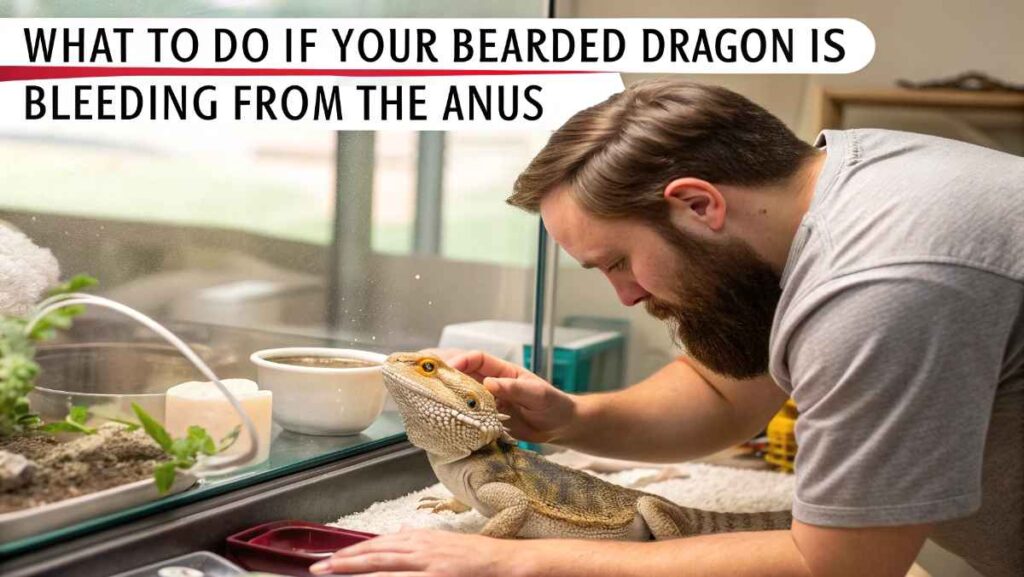
Stay calm, but act quickly.
Do:
- Keep the enclosure warm
- Remove rough substrate
- Keep the vent area clean
- Isolate the dragon from others
Do NOT:
- Pull or cut tissue
- Apply home remedies
- Ignore the bleeding
Contact a reptile vet as soon as possible.
Veterinary Diagnosis and Treatment
A vet will first examine the vent area. Depending on the cause, tests may include:
- Physical exam
- Fecal test
- X-ray
- Ultrasound
Treatment may involve:
- Fluids for dehydration
- Medications for parasites or infection
- Lubrication or gentle care for prolapse
- Surgery in severe cases
Early treatment gives the best chance of recovery.
Can Bearded Dragon Anal Bleeding Heal on Its Own?
Very mild irritation might improve with proper care. However, most cases do not heal without help. Bleeding often means internal damage or disease. Waiting can allow the problem to grow worse and become life-threatening.
It is always safer to consult a vet.
How to Prevent Anal Bleeding in Bearded Dragons
Prevention starts with good care.
- Keep basking temperatures correct
- Provide clean drinking water
- Offer warm baths regularly
- Feed a balanced diet with fiber
- Avoid loose sand substrate
- Monitor poop regularly
Healthy digestion reduces most vent problems.
Bearded Dragon Bleeding From Anus Treatment
Treatment depends on the cause. Keep your bearded dragon warm and clean. Give warm water soaks. Remove rough items from the tank. Do not pull tissue. Visit a reptile vet quickly for proper tests, medicine, or surgery if needed.
Bearded Dragon Bleeding From Anus Symptoms
Common symptoms include blood on poop, blood near the vent, straining to poop, swelling, weakness, or loss of appetite. Some dragons act normal at first. Any bleeding is a warning sign and should never be ignored.
Bearded Dragon Bleeding From Mouth
Bleeding from the mouth may come from injury, mouth rot, infection, or biting hard objects. You may see swelling, bad smell, or trouble eating. This problem needs fast vet care because mouth infections can spread and become serious.
Bearded Dragon Prolapse
A prolapse looks like red or pink tissue coming out of the vent. It often happens from straining, constipation, or egg issues. This is an emergency. Keep the area moist, do not push it back, and see a vet immediately.
Frequently Asked Questions
Why is my bearded dragon pooping blood?
Blood in poop usually means irritation, parasites, constipation, or injury. Straining damages tissue. Even small blood spots are abnormal and need vet advice quickly now.
Is bleeding from the anus serious?
Yes, bleeding from the anus is serious. It can signal internal injury, impaction, prolapse, or infection and should be checked by a reptile vet quickly.
What are the first signs of MBD in bearded dragons?
MBD early signs include soft jaw, shaky legs, weakness, poor appetite, slow movement, and trouble standing. Early treatment helps prevent permanent bone damage later problems.
What are the signs of coccidia in bearded dragons?
Signs of coccidia include runny poop, bad smell, weight loss, weakness, poor appetite, dehydration, and slow growth, especially in young bearded dragons kept indoors often.
What are the signs of a parasite in bearded dragon poop?
Parasite signs include blood or mucus in poop, diarrhea, weight loss, poor appetite, weakness, and strong smell. A fecal test confirms parasites accurately at clinic.
Is blood in bearded dragon’s stool a concern?
Yes, blood in stool is a concern. It suggests irritation, parasites, injury, or impaction. Any blood should be treated as urgent health warning sign today.
Bearded dragon has blood in stool?
Blood in stool is not normal. Keep your dragon warm, hydrated, and calm, but contact a reptile vet to find the cause quickly and safely.
Bearded dragon bleeding from rectum area?
Bleeding from the rectum area may come from straining, injury, prolapse, or infection. This needs prompt attention and veterinary examination to prevent worsening health issues.
My beardie is impacted, bleeding, in pain. What to do?
Place your beardie in a warm soak, keep the tank warm, remove loose substrate, and seek emergency reptile vet care immediately without delay or handling.
Bearded Dragon colon falling out?
Colon falling out is a cloacal prolapse. Keep tissue moist, do not push it back, and get emergency veterinary help immediately to save your dragon.
Final Thoughts: Keeping Your Bearded Dragon Safe
Bleeding from the anus is frightening, but it is also a clear warning. Your bearded dragon is telling you something is wrong. Fast action can save its life.
Good care, proper diet, and quick vet attention are the best tools you have. Never ignore blood. Early help makes recovery much easier.
Your bearded dragon depends on you.