









Yes, bearded dragons can eat rapini, also called broccoli rabe, but only in moderation. It should be an occasional food, not a daily green. Rapini has some good nutrients, but it also has compounds that can cause problems if fed too often.
This guide explains what rapini is, why moderation matters, how often to feed it, and how to prepare it safely for your bearded dragon.
What Is Rapini (Broccoli Rabe)?
Rapini is a leafy green vegetable from the same family as broccoli and kale. It has thin stems, dark green leaves, and a slightly bitter taste. People often cook it, but for bearded dragons, it should be served raw.
Because rapini looks like other leafy greens, many owners wonder if it is safe for their reptiles. The answer depends on how often and how much you feed.
Can Bearded Dragons Eat Rapini?
Yes, they can eat rapini, but it should be treated as a treat green, not an everyday food.
Rapini is not poisonous, and many bearded dragons will eat it without problems. The issue is that rapini contains oxalates and goitrogens, which can cause health issues if fed too often.
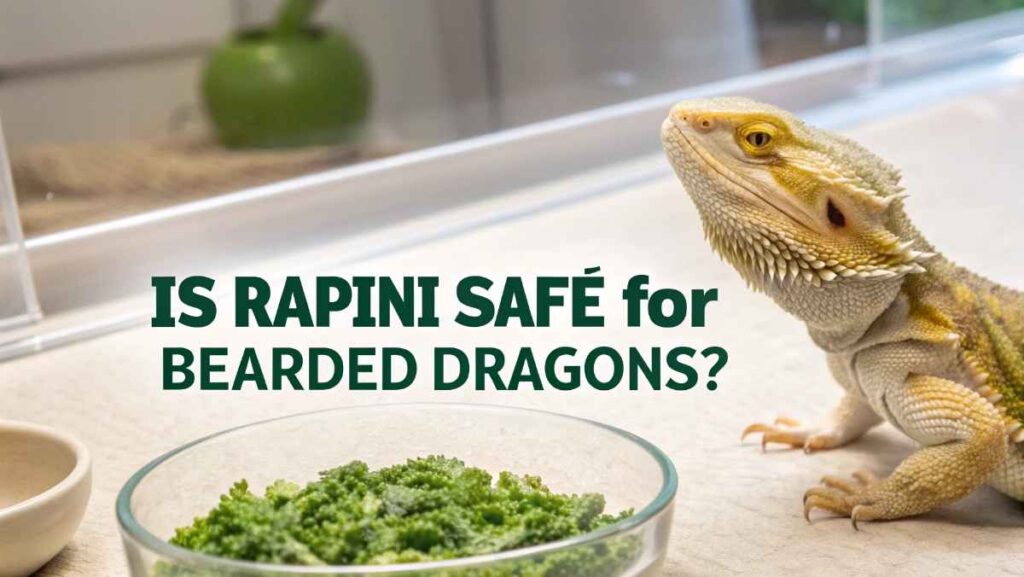
Is Rapini Safe for Bearded Dragons?
Why Rapini Can Be Okay Sometimes
Rapini has:
- Fiber that supports digestion
- Some vitamins that help overall health
- A leafy texture that many bearded dragons enjoy
When fed occasionally, rapini is generally safe.
Why Rapini Should Not Be Fed Daily
Rapini also contains things that can be harmful over time:
- Oxalates: These bind to calcium and stop the body from using it properly
- Goitrogens: These may affect thyroid function if eaten too often
- Poor calcium balance: Bearded dragons need foods with more calcium than phosphorus
Too much rapini can increase the risk of calcium deficiency and bone problems.
Nutritional Value of Rapini for Bearded Dragons
Rapini does have nutrients, but it is not perfectly balanced for reptiles.
| Nutrient | Why It Matters | Is It Ideal? |
| Fiber | Helps digestion | Yes |
| Vitamin A | Supports skin and eyes | In moderation |
| Calcium | Needed for bones | Low compared to phosphorus |
| Oxalates | Bind calcium | High (not ideal) |
This is why rapini works better as a small part of a mixed salad, not the main green.
How Often Can Bearded Dragons Eat Rapini?
Rapini should be fed once every 1–2 weeks.
- Adult bearded dragons: Small amount, occasionally
- Juveniles: Even less often than adults
- Babies: Best avoided or given very rarely
Feeding rapini too often can slowly cause health problems, even if your dragon seems fine at first.
How Much Rapini Should You Feed?
Portion size matters just as much as frequency.
- Offer a few small chopped leaves
- Avoid thick or hard stems
- Mix rapini with safer greens instead of feeding it alone
A good rule: rapini should make up no more than 10% of the salad on feeding day.
How to Safely Prepare Rapini for Bearded Dragons
Preparing rapini the right way reduces risks.
- Wash thoroughly to remove dirt and chemicals
- Serve raw (never cooked or seasoned)
- Chop into small pieces to prevent choking
- Remove thick stems if they are tough
Never add salt, oil, or spices. Bearded dragons need plain vegetables only.
Best Greens to Feed Instead of Rapini (Daily Options)
If you are building a healthy daily diet, these greens are better choices:
- Collard greens
- Mustard greens
- Dandelion greens
- Turnip greens
- Endive
These greens have better calcium levels and fewer harmful compounds.
Signs Your Bearded Dragon Ate Too Much Rapini
If rapini is fed too often, you may notice:
- Weakness or low energy
- Reduced appetite
- Soft or irregular stools
- Trouble moving or climbing (long-term issue)
If you see these signs, stop feeding rapini and switch to safer greens.
Can Baby Bearded Dragons Eat Rapini?

Baby bearded dragons are more sensitive than adults.
- They need high calcium foods
- Their bones grow very fast
- Calcium blocking foods are riskier for them
Because of this, rapini is not recommended for babies. If used at all, it should be a very tiny amount and very rare.
Rapini vs Other Greens (Comparison)
| Green | Safe for Daily Feeding? | Notes |
| Rapini | No | Occasional only |
| Collard greens | Yes | Excellent calcium source |
| Mustard greens | Yes | Very good staple |
| Dandelion greens | Yes | Natural and nutritious |
| Broccoli | Rare | Similar limits as rapini |
This comparison shows why rapini belongs in the “sometimes” category.
Can Bearded Dragons Eat Rapini Leaves
Yes, bearded dragons can eat rapini leaves in small amounts. They are not toxic, but they should not be fed often. Too much rapini can reduce calcium use, so offer it only sometimes.
Can Bearded Dragons Eat Rapini Greens
Rapini greens are safe for bearded dragons when fed rarely. They contain some good nutrients, but they also have compounds that can block calcium. Always mix rapini greens with safer daily vegetables.
Can Bearded Dragons Eat Broccoli Rabe?
Broccoli rabe is another name for rapini. Bearded dragons can eat it occasionally, but not every day. Feeding it too often may lead to calcium problems, so it works best as a rare treat.
Can Bearded Dragons Eat Turnip Greens
Yes, turnip greens are very good for bearded dragons. They are high in calcium and low in harmful compounds. Turnip greens can be fed regularly as part of a healthy daily vegetable diet.
Can Bearded Dragons Eat Escarole
Escarole is safe for bearded dragons and is a good leafy green. It has low oxalates and decent nutrition. Escarole can be fed often, but it should still be mixed with other greens.
Can Bearded Dragons Eat Kale
Bearded dragons can eat kale, but only sometimes. Kale has nutrients, but it also contains oxalates and goitrogens. Feeding kale too often may block calcium, so it should not be a daily food.
Can Bearded Dragons Eat Bok Choy
Yes, bok choy is safe for bearded dragons in moderation. It contains water and nutrients, but too much can upset the calcium balance. Offer bok choy occasionally and mix it with better staple greens.
Is Collard Greens Good for Bearded Dragons
Yes, collard greens are excellent for bearded dragons. They are high in calcium and support strong bones. Collard greens are one of the best daily staple vegetables for a healthy bearded dragon diet.
What Fruits Can Bearded Dragons Eat
Bearded dragons can eat fruits like apples, berries, mango, papaya, and melon. Fruits should only be treats because they are high in sugar. Feed small amounts once or twice a week.
Can Bearded Dragons Eat Dandelion Greens
Yes, dandelion greens are very healthy for bearded dragons. They are rich in calcium and nutrients. Dandelion greens can be fed regularly and make an excellent addition to a balanced vegetable diet.
Frequently Asked Questions
Can bearded dragons eat rapini every day?
No. Daily feeding can cause calcium problems and should be avoided.
Is rapini better than broccoli?
They are similar. Both should be fed rarely, not daily.
What greens do you feed your 9-month-old bearded dragon?
Feed collard greens, mustard greens, dandelion greens, and turnip greens daily, mixed with insects for balanced nutrition.
What greens do I use as a staple specifically?
Use collard greens, mustard greens, turnip greens, and dandelion greens as staple vegetables for everyday feeding.
How to care for a bearded dragon that won’t eat vegetables?
Try different greens, chop finely, mix with insects, ensure proper lighting, and stay patient while gradually encouraging vegetables.
What is the most common cause of death in bearded dragons?
Poor diet and calcium deficiency cause most deaths, often leading to metabolic bone disease and organ failure.
What vegetables should you not feed a bearded dragon?
Avoid onions, garlic, avocado, rhubarb, and iceberg lettuce because they are toxic or lack nutrition.
Can I give my bearded dragon collard greens?
Yes, collard greens are excellent and safe, rich in calcium, and can be fed daily as a staple vegetable.
What food is toxic for bearded dragons?
Toxic foods include avocado, rhubarb, onions, garlic, fireflies, wild insects, and foods treated with pesticides.
What is a bearded dragon’s favorite vegetable?
Many bearded dragons enjoy collard greens, squash, bell peppers, and dandelion greens, though preferences vary by individual.
Final Verdict
Can bearded dragons eat rapini? Yes—but only as an occasional treat.
Rapini is not toxic, but it is not balanced enough for daily feeding. Too much can block calcium and lead to health problems over time. If you choose to feed rapini, keep portions small, feed it rarely, and always mix it with safer greens.
A healthy bearded dragon diet is about balance, variety, and moderation.