



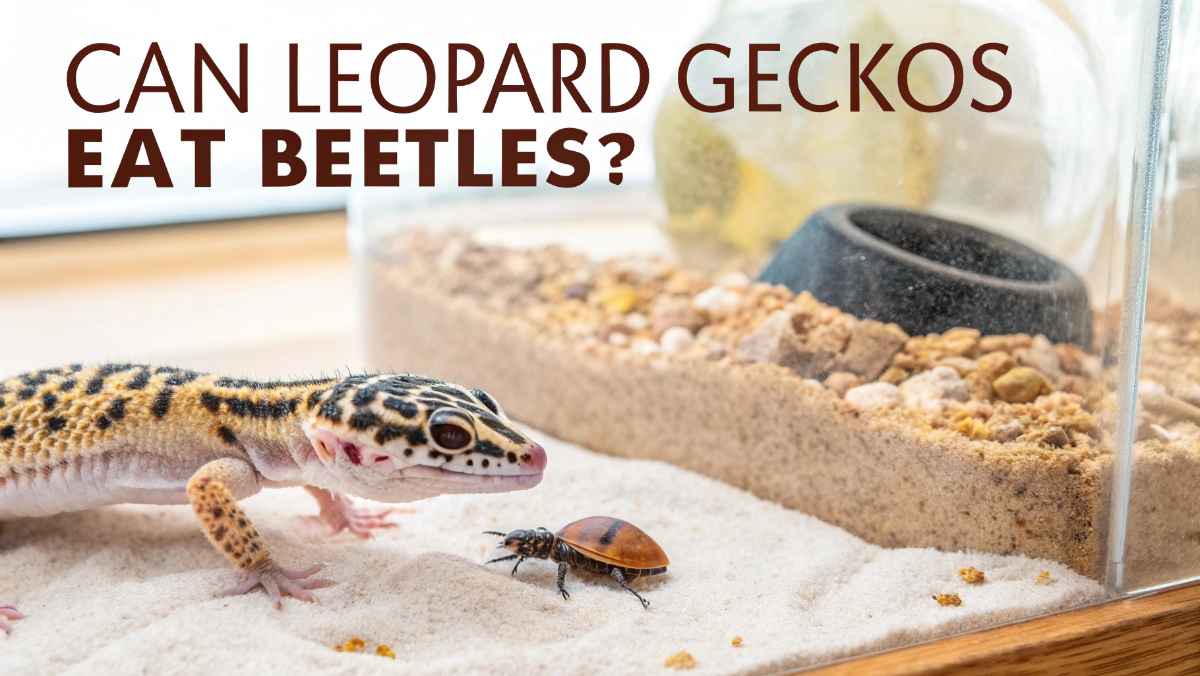
Leopard geckos are small reptiles that many people keep as pets. They are easy to care for and have a simple diet. But many owners still wonder about different insects they may find around their home. One common question is: can leopard geckos eat beetles?
Leopard geckos can eat some beetles, but only as an occasional treat. Many beetles have hard shells or may bite, so safer insects are better.
In this guide, you will learn if beetles are safe, which types may be eaten, and what insects are better for your leopard gecko.
What Do Leopard Geckos Normally Eat?
Leopard geckos are insect-eating reptiles. In the wild, they hunt small insects at night. Their bodies are built to eat moving prey.
Common foods in their natural diet include:
- Crickets
- Small roaches
- Beetles
- Worms
- Other small insects
Pet leopard geckos usually eat feeder insects that are easy to buy from pet stores. These insects are raised safely and provide good nutrition.
The most common feeder insects include:
- Crickets
- Dubia roaches
- Mealworms
- Waxworms
- Silkworms
These insects are softer and easier to digest compared to many beetles.
Are Beetles Safe for Leopard Geckos?
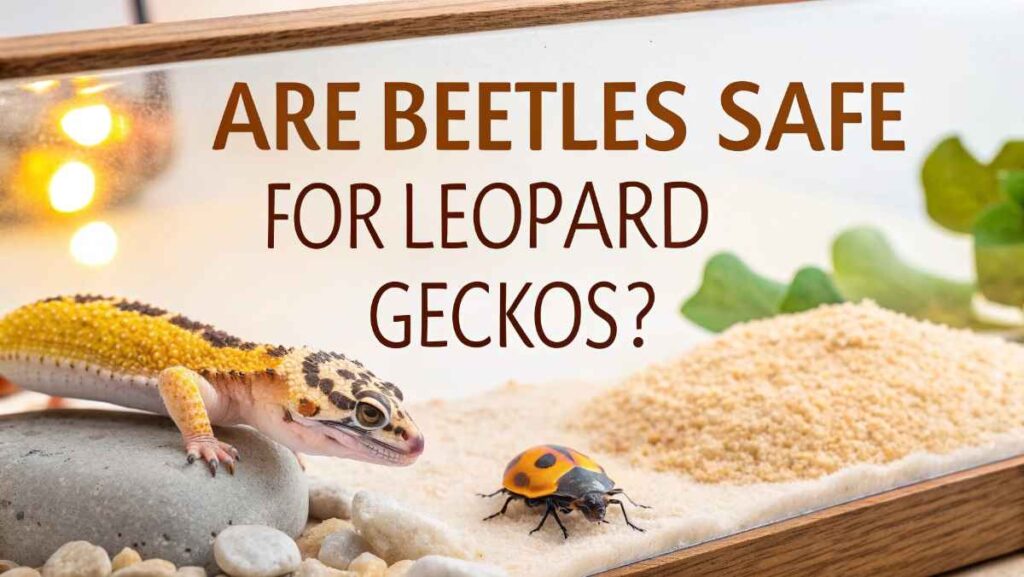
Some beetles can be eaten by leopard geckos, but they are not always the safest choice.
The main reason is their hard outer shell. Beetles have a thick exoskeleton made of chitin. This shell protects them in the wild but can make digestion harder for reptiles.
If a beetle is too large or too hard, your gecko may struggle to chew or digest it.
Another issue is that some beetles produce bad smells or defensive chemicals. These chemicals help protect them from predators. Because of this, many leopard geckos simply refuse to eat beetles.
So while beetles are not always dangerous, they should not replace healthier feeder insects.
Types of Beetles Leopard Geckos May Eat
Not all beetles are the same. Some types are safer than others.
Mealworm Beetles
Mealworms turn into darkling beetles when they grow up. These beetles are sometimes offered to leopard geckos.
However, many geckos do not like them. They have a strong smell and a harder shell than mealworms. If your gecko eats them, they should only be offered occasionally.
Darkling Beetles
Darkling beetles are the adult form of mealworms. They are safe in small amounts, but they are not very nutritious compared to other feeder insects.
Some geckos will eat them, while others completely ignore them. Because of their hard shell and lower nutrition, they should not be fed often.
Small Soft-Shell Beetles
Very small beetles with thinner shells may be easier for a leopard gecko to eat. However, these should only be used if they come from a safe source.
Wild beetles can carry chemicals or parasites, so feeding random insects from outside is risky.
Why Beetles Are Not the Best Feeder Insect
Beetles are not the best insect for leopard geckos for several reasons.
Hard Exoskeleton
The biggest problem is the hard outer shell. This shell can be difficult for leopard geckos to digest. Eating too many hard insects may cause stomach problems.
Lower Nutrition
Compared to crickets or roaches, many beetles do not provide the same level of nutrients. Leopard geckos need protein, calcium, and healthy fats to stay strong.
Strong Smell or Taste
Some beetles release a smell or chemical when they feel threatened. This can make them unappealing to leopard geckos.
Because of these reasons, most reptile keepers prefer other feeder insects.
How Often Can Leopard Geckos Eat Beetles?
If you choose to feed beetles, they should only be given once in a while. A good rule is to treat beetles like a small snack rather than a regular meal.
You can offer them:
- Occasionally as a treat
- In small amounts
- Along with other healthier insects
Your leopard gecko should mainly eat insects that are easier to digest and more nutritious.
Risks of Feeding Wild Beetles
Many people find beetles outside and wonder if they can feed them to their gecko. This is usually not recommended.
Wild insects can cause several problems.
Pesticides
Insects living outside may have been exposed to pesticides or chemicals. These substances can be harmful to reptiles.
Parasites
Wild insects may carry parasites that could make your leopard gecko sick.
Toxic Species
Some beetles produce toxic chemicals as a defense. Leopard geckos may become ill if they eat the wrong type.
For these reasons, it is always safer to use store-bought feeder insects.
Best Insects for Leopard Geckos
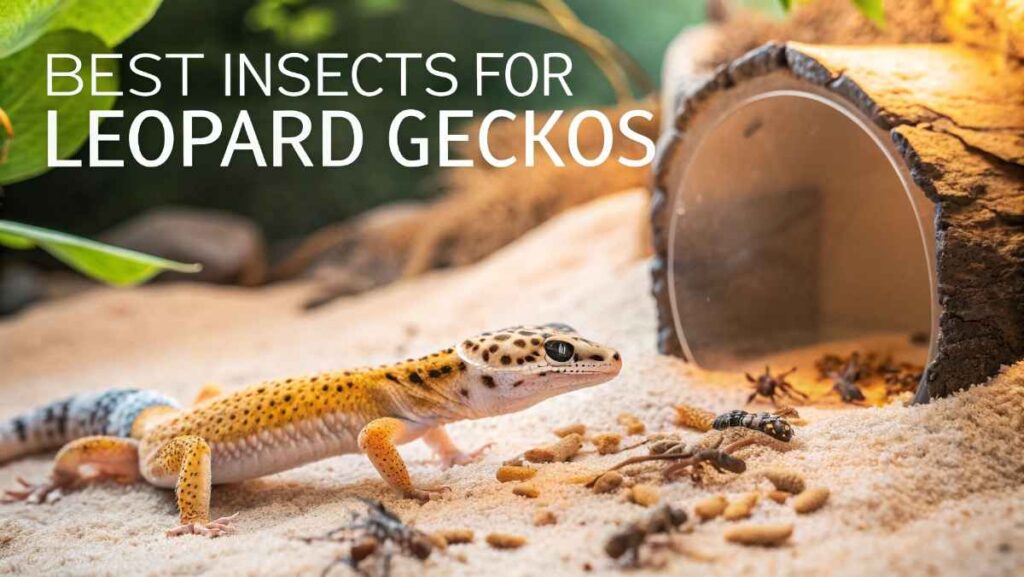
If beetles are not the best choice, what should leopard geckos eat instead?
Here are some of the best feeder insects.
Crickets
Crickets are one of the most common foods for leopard geckos. They are active insects that trigger a gecko’s hunting instinct.
They are also high in protein and easy to digest.
Dubia Roaches
Dubia roaches are another excellent feeder insect. They are very nutritious and contain a good balance of protein and fat.
Many reptile owners prefer them because they are easy to keep and do not smell much.
Mealworms
Mealworms are popular and easy to find. Leopard geckos usually enjoy eating them.
However, they do have a slightly harder shell, so they should be part of a varied diet.
Waxworms
Waxworms are soft and high in fat. Leopard geckos love them, but they should only be given as an occasional treat.
Too many waxworms can lead to weight gain.
Silkworms
Silkworms are soft and very nutritious. They are an excellent feeder insect if you can find them.
They are easy to digest and contain useful nutrients for reptiles.
Insects Leopard Geckos Should Avoid
Not every insect is safe for leopard geckos. Some can be dangerous or toxic.
Avoid feeding these insects:
- Fireflies
- Wild insects caught outside
- Very large beetles
- Poisonous insects
- Brightly colored bugs that may be toxic
Fireflies are especially dangerous and should never be fed to leopard geckos.
How to Safely Feed Insects to Leopard Geckos
Feeding insects correctly is very important for your pet’s health.
Choose the Right Size
The insect should not be bigger than the space between your gecko’s eyes. This helps prevent choking or digestion problems.
Gut-Load the Insects
Gut-loading means feeding the insects healthy foods before giving them to your gecko. This increases the nutrition your pet receives.
Add Calcium Powder
Leopard geckos need calcium for strong bones. Dusting insects with calcium powder helps prevent health problems.
Provide Fresh Water
Always keep a small dish of clean water in the enclosure.
Feeding Tips for Healthy Leopard Geckos
Keeping your leopard gecko healthy requires a balanced feeding routine.
Here are some helpful tips:
- Feed young geckos daily
- Feed adult geckos every two to three days
- Use different insects to provide variety
- Do not overfeed fatty insects
- Remove uneaten insects from the tank
A varied diet helps make sure your leopard gecko receives all the nutrients it needs.
Comparison Table of Feeder Insects
Here is a simple guide showing how beetles compare to other feeder insects.
| Insect | Safe | Feeding Frequency |
| Beetles | Sometimes | Rare treat |
| Crickets | Yes | Regular food |
| Dubia roaches | Yes | Regular food |
| Mealworms | Yes | Moderate |
| Waxworms | Yes | Occasional treat |
This table shows that beetles are not usually the best everyday option.
Signs Your Leopard Gecko Likes or Dislikes Beetles
Every leopard gecko has its own preferences. You may notice certain behaviors when offering beetles.
Signs your gecko likes them:
- Quickly chasing the insect
- Eating it without hesitation
- Showing excitement during feeding
Signs your gecko dislikes them:
- Ignoring the insect
- Walking away
- Spitting it out
If your gecko refuses beetles, there is no reason to force them. Many geckos simply prefer other insects.
Can Leopard Geckos Eat Mealworm Beetles
Yes, leopard geckos can eat mealworm beetles, but only sometimes. These beetles have a harder shell than mealworms and many geckos dislike their smell. If offered, give them rarely as a small treat, not as a regular part of the diet.
Can Leopard Geckos Eat Darkling Beetles
Leopard geckos can eat darkling beetles in small amounts, but they are not the best feeder insect. Their hard outer shell makes digestion harder. Some geckos refuse them completely, so it is better to feed softer insects most of the time.
Can Leopard Geckos Eat Mealworm Pupa
Yes, leopard geckos can eat mealworm pupae. They are soft, easy to digest, and many geckos enjoy them. Pupae can be offered occasionally along with other insects, but they should not replace staple feeders like crickets or roaches.
Can Leopard Geckos Eat Ants
Leopard geckos should not eat ants. Ants are very small, low in nutrition, and some species can bite or contain harmful chemicals. It is much safer to feed proper feeder insects like crickets, mealworms, or dubia roaches.
Can Mealworm Beetles Fly
Mealworm beetles, also called darkling beetles, cannot fly. They have wings under their shell, but they rarely use them.
Most of the time they simply walk around the enclosure and do not pose much movement like flying insects.
What Can Leopard Geckos Eat
Leopard geckos eat insects only. Good food choices include crickets, dubia roaches, mealworms, waxworms, and silkworms.
These insects provide protein and nutrients. Always dust insects with calcium powder to help keep your gecko healthy and strong.
Can Darkling Beetles Fly
Darkling beetles usually cannot fly even though they have wings. Most species keep their wings closed under their hard shell and prefer walking. Because of this, they stay on the ground and move slowly compared to flying insects.
FAQs
Will a leopard gecko eat beetles?
Yes, leopard geckos may eat some beetles, but many avoid them. Hard shells and smell make beetles less preferred insects.
What kind of bugs can I feed my leopard gecko?
You can feed crickets, dubia roaches, mealworms, waxworms, and silkworms. These insects are nutritious and commonly used as feeder insects.
What foods are toxic to geckos?
Fireflies, wild insects, citrus fruits, avocado, and insects exposed to pesticides are dangerous and should never be fed to geckos.
Why put mealworms in the fridge?
Putting mealworms in the fridge slows their growth and movement. This helps keep them fresh longer and stops them turning into beetles quickly.
How can you tell if a leopard gecko is happy?
A happy leopard gecko eats well, explores its enclosure, has bright eyes, smooth shedding, and keeps a healthy thick tail.
Should you soak dried mealworms?
Yes, soaking dried mealworms in water softens them and adds moisture, making them easier for leopard geckos to eat and digest.
Should I remove dead mealworms?
Yes, remove dead mealworms from the enclosure quickly. Dead insects can spoil, smell bad, and may attract bacteria or pests.
Are mealworm beetles safe for little duders
Mealworm beetles are generally safe, but they are not ideal. Their hard shell and smell make them less suitable for small geckos.
Can leopard geckos eat the beetle form of mealworms?
Yes, leopard geckos can eat the beetle form of mealworms sometimes, but they are harder and less nutritious than mealworms.
I want to make a clean up crew for my leopard gecko and am wondering if superworm beetles will work?
Superworm beetles usually do not work well as a cleanup crew. They may hide, smell strong, and geckos might eat them.
Final Thoughts
Leopard geckos can eat beetles, but they are not the best feeder insect. Their hard shells and lower nutrition make them less suitable for regular feeding.
It is much better to feed insects like crickets, roaches, and worms as the main part of your gecko’s diet. These insects are easier to digest and provide better nutrition.
If you decide to offer beetles, treat them as an occasional snack and always choose safe feeder insects.
A healthy diet with variety, proper supplements, and correct feeding habits will help your leopard gecko live a long and happy life.