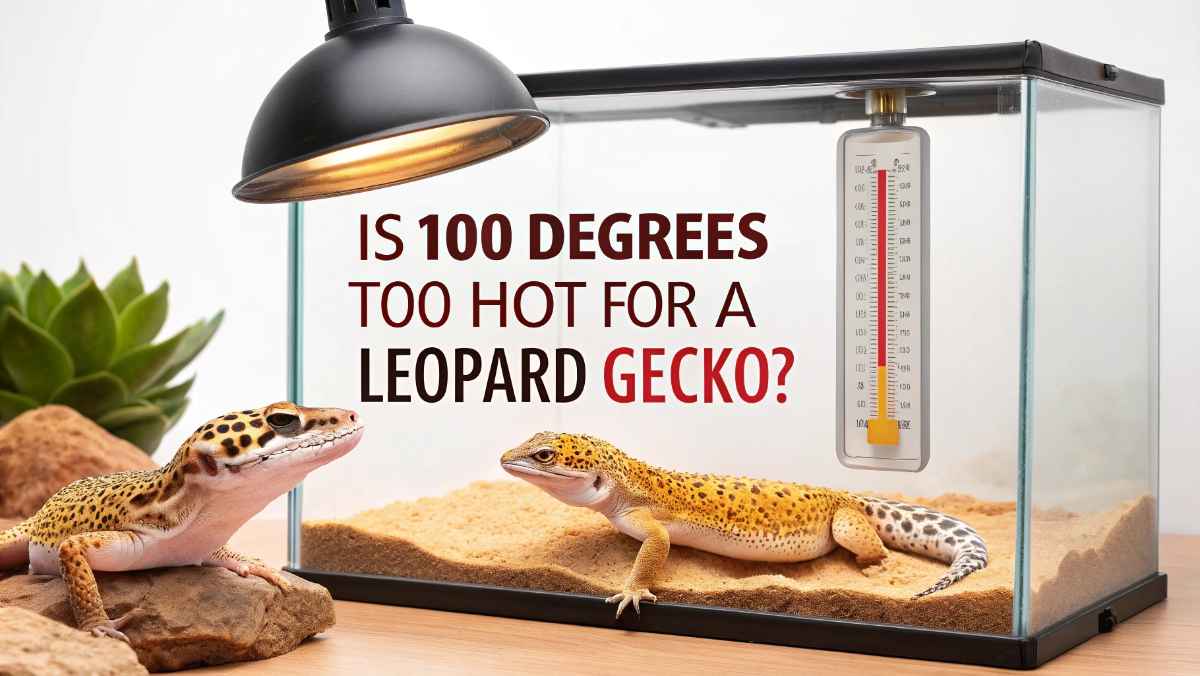








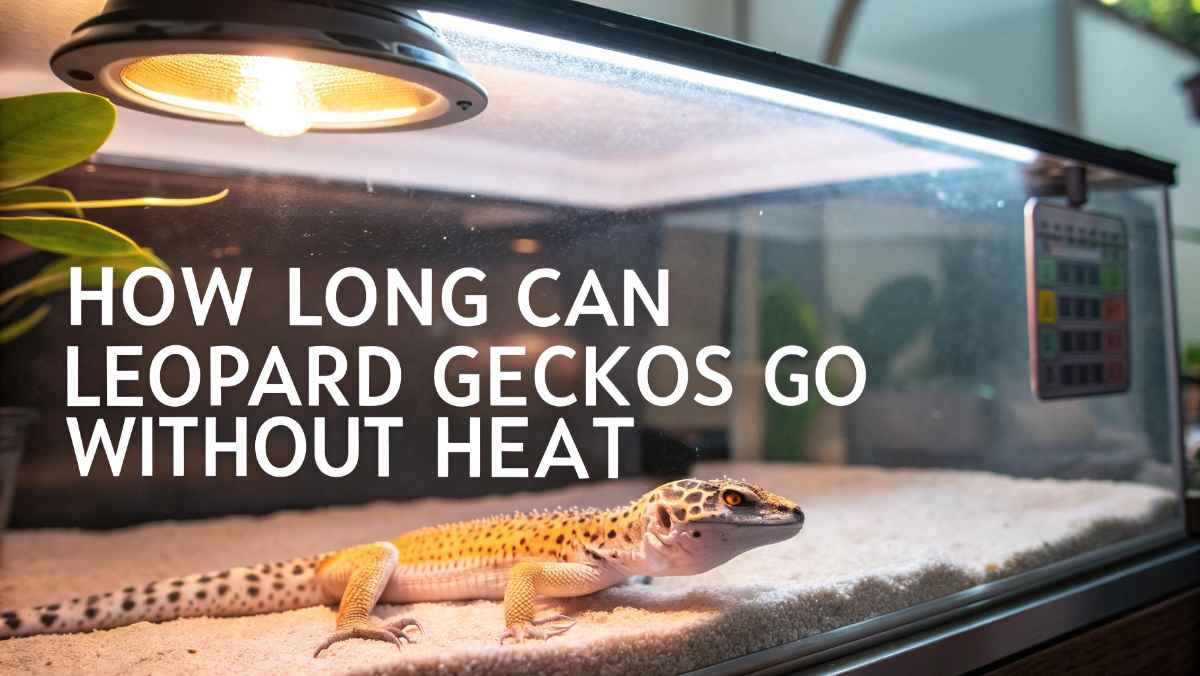
Leopard geckos are small reptiles that depend on heat to stay active and healthy. Unlike humans, they cannot control their own body temperature, so they need warmth from their environment.
Leopard geckos can go without heat for 1–2 days if temps stay above 60°F. Below that or longer outages are dangerous and need quick warming to stay safe.
In this guide, you will learn how long leopard geckos can go without heat, what risks to watch for, and how to keep your pet safe and comfortable.
Can Leopard Geckos Survive Without Heat?
Yes, leopard geckos can survive without heat for a short time. But this does not mean they are okay without it. They are cold-blooded animals. This means they depend on outside heat to control their body temperature.
In the wild, they move between warm and cool places. In captivity, they depend on you to provide heat. Without it, their body cannot work properly.
Heat helps them:
- Digest food
- Stay active
- Keep their immune system strong
Without heat, everything in their body slows down. So, while they may survive for a while, they are not healthy during that time.
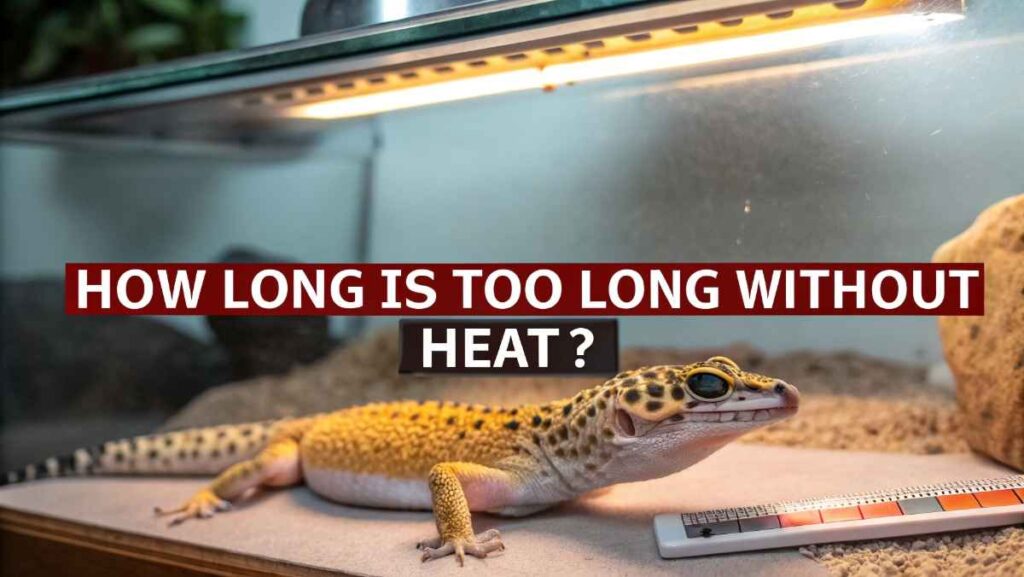
How Long Is Too Long Without Heat?
A Few Hours Without Heat
This is completely safe. If the heat turns off for a few hours, there is no need to worry. Your gecko will be fine.
24–48 Hours Without Heat
This is usually okay if the room stays warm (above 70°F / 21°C). Your gecko may become less active, but serious problems are not likely yet.
Several Days Without Heat
Now the risk starts to increase.
Your gecko may:
- Stop eating
- Become very slow
- Hide most of the time
At this stage, their body is struggling.
Weeks Without Heat
Leopard geckos may survive for weeks because they store fat in their tail. But this is very dangerous.
Long-term lack of heat can cause:
- Serious health problems
- Weight loss
- Weak immune system
- Possible death
👉 So even if they survive, it is NOT safe at all.
What Temperature Is Safe for Leopard Geckos?
Temperature is very important for leopard geckos. They need a warm and cool side in their tank.
Ideal Temperature:
- Warm side: 85–92°F (29–33°C)
- Cool side: 70–75°F (21–24°C)
Minimum Safe Temperature:
- Around 60°F (16°C)
Below this level is dangerous.
If the temperature drops too low:
- Their body shuts down slowly
- They cannot move properly
- Health problems begin
Keeping the right temperature helps your gecko live a long and healthy life.
What Happens If a Leopard Gecko Gets Too Cold?
When a leopard gecko gets too cold, many problems start to happen.
Slow Metabolism
Their body slows down. They move less and sleep more.
Cannot Digest Food
This is a big problem. Without heat, food stays in their stomach. This can lead to impaction, which is very dangerous.
Weak Immune System
They can get sick more easily. Infections become harder to fight.
Low Energy
Your gecko may stop exploring and become very inactive.
Weight Loss
If they stop eating or digesting properly, they will lose weight.
👉 Cold temperatures affect almost every part of their body.
Can Leopard Geckos Eat Without Heat?
No, they should not eat without heat.
If you feed your gecko when there is no heat:
- Food will not digest
- It may rot inside the stomach
- This can cause serious blockage (impaction)
👉 Important rule: Never feed your leopard gecko if their heat source is not working.
Wait until the temperature is back to normal before feeding again.
What To Do If Your Gecko Has No Heat (Emergency Guide)
Sometimes heat stops suddenly, like during a power outage. Here’s what you should do:
Keep the Room Warm
Close windows and doors. Try to keep warm air inside the room.
Use Blankets
Cover the tank with a blanket to hold heat. Do not block airflow completely.
Use Body Heat (Carefully)
You can hold your gecko gently to share body warmth. Make sure your hands are clean and warm.
Move to a Warmer Area
If possible, place the tank in a warmer part of your home.
Use Warm Water Bottles
Wrap a warm (not hot) water bottle in cloth and place it near the tank.
Do NOT Feed
Wait until proper heat is restored.
Avoid Sudden Temperature Changes
Do not expose your gecko to extreme heat quickly. Gradual warmth is better.
Signs Your Leopard Gecko Is Too Cold
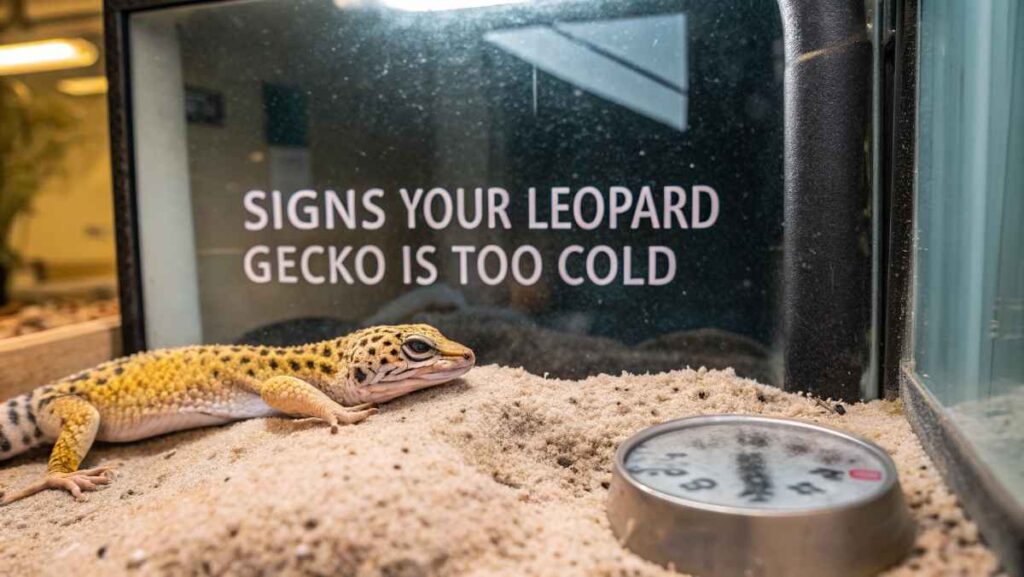
It is important to notice when your gecko is cold.
Look for these signs:
- Not moving much
- Refusing food
- Staying in one spot
- Weak or slow movements
- Cold body to touch
- Hiding all the time
If you see these signs, check the temperature immediately.
Best Heat Sources for Leopard Geckos
Heat Mat
- Placed under the tank
- Good for belly heat
- Helps digestion
Heat Lamp
- Provides warmth from above
- Good for daytime heating
Ceramic Heat Emitter
- Gives heat without light
- Great for night use
👉 Best setup: Use a thermostat to control temperature. This keeps heat safe and stable.
Safe vs Dangerous Temperature Table
| Condition | Temperature | Risk Level |
| Ideal | 85–92°F | Safe |
| Moderate | 70–80°F | Low Risk |
| Low | 60–70°F | Risky |
| Below 60°F | Below 60°F | Dangerous |
How Long Can Leopard Geckos Go Without Heat At Night
Leopard geckos can go one night without heat if the room stays warm. They may become less active, but usually stay safe. If the temperature drops too low, it can stress them. Always restore heat as soon as possible to keep your gecko healthy.
How Long Can Leopard Geckos Go Without Water
Leopard geckos can survive without water for a few days, but it is not healthy. They may get dehydrated over time. Fresh water should always be available. Dehydration can cause shedding problems and weakness, so never leave your gecko without water for long periods.
How To Keep A Gecko Warm Without A Heat Lamp
You can keep your gecko warm by covering the tank with a blanket to trap heat. Move it to a warmer room if possible. You can also use a warm water bottle wrapped in cloth. Always avoid sudden heat changes and never let temperatures drop too low.
How Long Can Bearded Dragons Go Without Heat
Bearded dragons can go without heat for about 24 hours if the room stays warm. After that, their health can suffer quickly. They need heat for digestion and energy. Without it, they may stop eating and become weak, so heat should be restored as soon as possible.
Heat Lamp For Leopard Gecko
A heat lamp helps keep your leopard gecko warm and active during the day. It provides a proper temperature for movement and digestion. Choose the right wattage and use a thermostat for safety. Good heating keeps your gecko healthy, comfortable, and stress-free in its enclosure.
FAQs
What temperature is too cold for a leopard gecko?
Temperatures below 60°F are too cold for leopard geckos. At this level, their body slows down, digestion stops, and serious health problems can begin quickly.
How do I tell if my leopard gecko is brumating?
A brumating gecko becomes less active, eats less, and sleeps more. It may hide often but still looks healthy and not weak.
How long can a lizard survive without a heat lamp?
Most lizards can survive 1–2 days without heat if temperatures stay warm. Longer periods can harm digestion, energy, and overall health quickly.
What are signs of stress in a gecko?
Signs of stress include hiding constantly, not eating, fast movements, tail waving, or trying to escape. Changes in behavior usually show something is wrong.
Do leopard geckos need a heat lamp 24/7?
Leopard geckos need heat all the time, but not always light. Use heat during day and safe night heating like ceramic emitters.
What happens if geckos get too cold?
If geckos get too cold, they become slow, stop eating, and cannot digest food. Long exposure can cause illness, weakness, and even death.
Can a leopard gecko go 2 weeks without food?
Yes, a healthy leopard gecko can go two weeks without food using fat stored in its tail, but it is not ideal or recommended.
How do I know if my lizard is too cold?
If your lizard is too cold, it will move slowly, refuse food, feel cold to touch, and stay hidden most of the time.
How long can they go without the heat lamp?
Leopard geckos can go about 24–48 hours without a heat lamp if temperatures stay warm. Longer than that increases risk and can harm health.
How long can a leopard gecko survive without heat during a hurricane?
During a hurricane, leopard geckos can survive 1–2 days without heat if kept warm. Longer outages require emergency heating to prevent serious health problems.
Final Verdict
Leopard geckos can survive without heat for a short time, but it is not safe. A few hours or even a day may be okay if the room is warm. But longer than that can cause serious health problems.
Heat is not optional for leopard geckos. It is necessary for digestion, energy, and overall health.
👉 The best thing you can do is:
- Always provide proper heat
- Monitor temperature daily
- Be prepared for emergencies
Keeping your gecko warm means keeping your gecko healthy.