







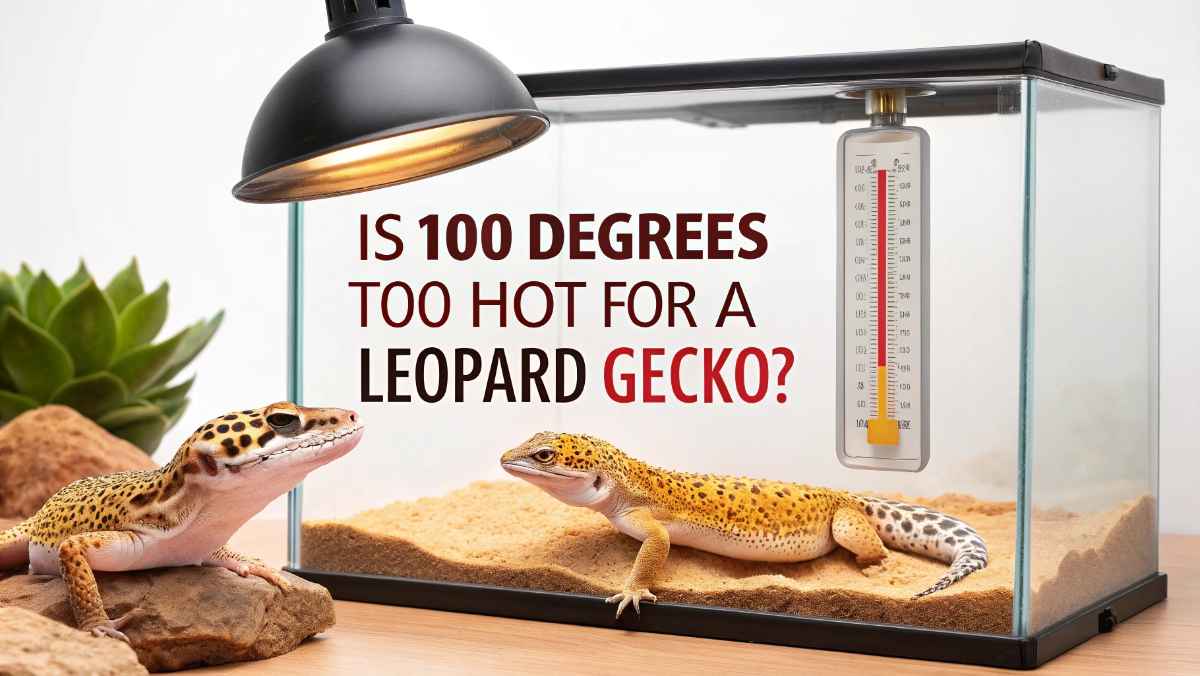
If you are caring for a leopard gecko, getting the temperature right is very important. Many owners ask, is 100 degrees too hot for a leopard gecko?
100°F is not too hot for a leopard gecko if it’s only the basking spot. The rest of the tank should stay cooler to prevent overheating and stress.
In this guide, you will learn the correct temperature setup and how to keep your gecko safe and comfortable every day.
Is 100 Degrees Too Hot for a Leopard Gecko?
A temperature of 100°F is not too hot if it is only in a small part of the tank called the basking spot.
Leopard geckos move between warm and cool areas to control their body heat. If your tank has only one high temperature, your gecko cannot escape the heat.
👉 Important rule: 100°F is safe only for the basking spot, not the entire enclosure.
If the whole tank reaches 100°F, it becomes dangerous and can harm your gecko.
Ideal Temperature for Leopard Geckos
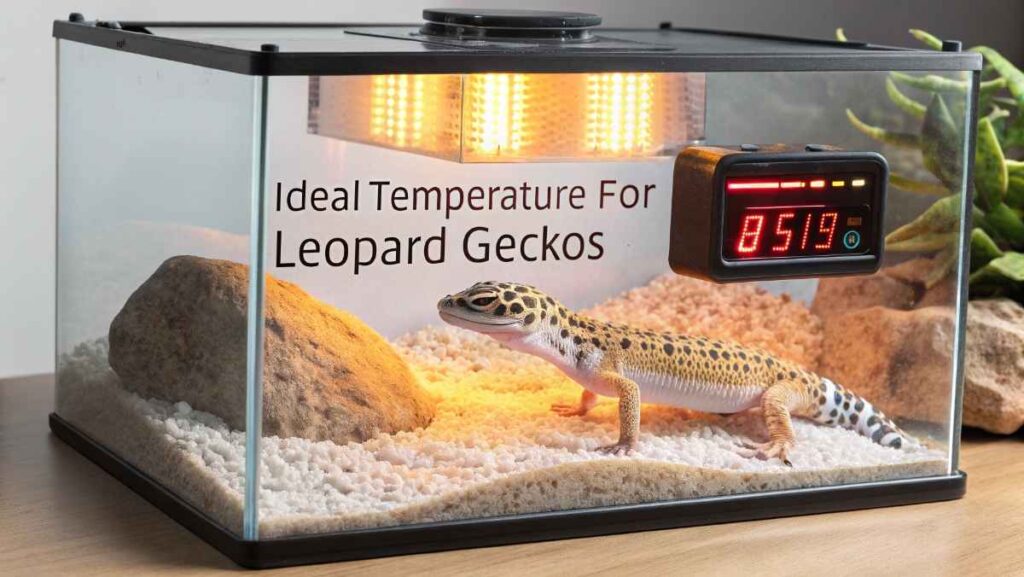
To keep your leopard gecko healthy, you must create a temperature gradient. This means different areas in the tank have different temperatures.
Basking Spot
- 90–100°F
- Helps digestion and energy
Warm Side
- 80–90°F
- Comfortable resting area
Cool Side
- 70–75°F
- Helps your gecko cool down
Night Temperature
- 65–75°F
- A slight drop is normal and safe
Temperature Table
| Area | Ideal Temperature |
| Basking Spot | 90–100°F |
| Warm Side | 80–90°F |
| Cool Side | 70–75°F |
| Night Temp | 65–75°F |
This setup allows your gecko to move freely and stay comfortable.
Why Temperature Gradient Is Important
Leopard geckos are cold-blooded animals. They cannot control their body heat like humans.
In nature, they move between warm rocks and cooler areas. In a tank, you must copy this setup.
Without a temperature gradient, your gecko may:
- Stop eating
- Feel stressed
- Become weak
- Get sick
A proper gradient helps your gecko:
- Digest food properly
- Stay active
- Live longer
When 100°F Is Safe
A basking spot of 100°F is safe when:
- It is only in one area
- Your gecko can move away easily
- There is a cool side in the tank
- You are using a thermometer
- Heat is controlled with a thermostat
In this case, your gecko will only use the heat when needed and move away when it feels too warm.
When 100°F Becomes Dangerous
100°F becomes harmful when the heat is not controlled.
Dangerous situations include:
- The entire tank is 100°F
- No cool hiding spot
- Poor ventilation
- Heat source too close
- No temperature monitoring
In these conditions, your gecko cannot cool down, which can lead to serious problems.
Signs Your Leopard Gecko Is Too Hot
Your gecko will show clear signs if it is too hot. You should check the tank immediately if you notice these behaviors.
Common signs:
- Staying only in the cool side
- Refusing food
- Low energy or weakness
- Trying to escape
- Rapid breathing or open mouth
These signs mean your tank temperature is too high.
Can Leopard Geckos Overheat?
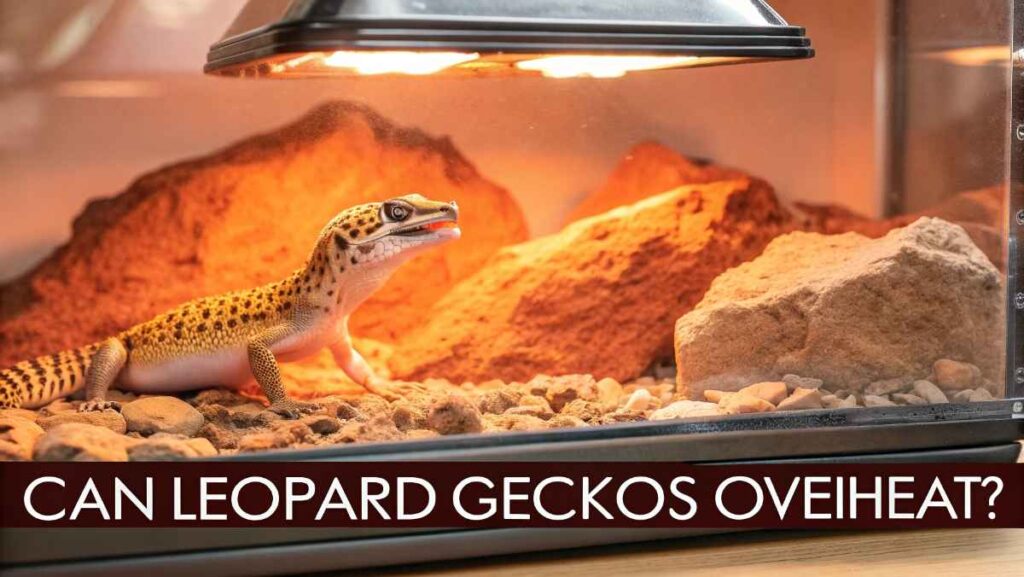
Yes, leopard geckos can overheat, and it can be dangerous. Unlike humans, they cannot sweat or cool down easily. If the tank is too hot, they can suffer from:
- Dehydration
- Stress
- Internal health problems
Overheating can become serious if not fixed quickly.
How to Fix High Temperature in the Tank
If your tank temperature is too high, you can fix it with simple steps.
Easy solutions:
- Use a lower watt heat bulb
- Raise the heat lamp higher
- Add a thermostat
- Improve airflow in the tank
- Turn off heat during very hot days
Always recheck the temperature after making changes.
Best Heat Sources for Leopard Geckos
Choosing the right heat source helps you maintain the correct temperature.
Heat Mat (Under Tank Heater)
- Provides belly heat
- Good for digestion
- Must use a thermostat
Ceramic Heat Emitter
- Produces heat without light
- Ideal for night use
Heat Lamp
- Creates a basking spot
- Good for daytime heating
Each option works well if used correctly.
Common Temperature Mistakes to Avoid
Many owners make simple mistakes that can affect their gecko’s health.
Avoid these:
- No temperature gradient
- Not using a thermometer
- Using heat without a thermostat
- Making the tank too hot
- Ignoring night temperature
Fixing these mistakes will improve your gecko’s comfort and safety.
How to Set Up the Perfect Tank Temperature
Setting up the right temperature is easier than it seems.
Follow these steps:
- Place heat source on one side of the tank
- Keep the other side cool
- Add a thermometer on both sides
- Use a thermostat to control heat
- Check temperatures daily
This simple setup creates a safe and natural environment.
Why Monitoring Temperature Is Important
Temperature can change during the day and night. It can also change with weather.
If you don’t monitor it, your tank can become too hot or too cold without you noticing.
Always:
- Check temperature daily
- Use digital thermometers
- Adjust heat when needed
Regular checks keep your gecko safe.
Tips for Keeping Your Leopard Gecko Safe
Here are some simple tips to follow:
- Always provide a cool hide
- Never heat the entire tank equally
- Avoid placing tank in direct sunlight
- Keep water available at all times
- Watch your gecko’s behavior daily
Small steps can make a big difference.
How Hot Is Too Hot For Leopard Gecko
Temperatures above 100°F across the whole tank are too hot for a leopard gecko. They need cooler areas to escape heat. Too much heat can cause stress, dehydration, and health problems, so always provide a proper temperature gradient inside the enclosure.
Leopard Gecko Temperature Celsius
Leopard geckos need a temperature range of about 21°C to 35°C. The warm side should be around 30–32°C, while the cool side stays near 21–24°C. This range helps them stay comfortable, active, and healthy throughout the day.
Leopard Gecko Basking Spot Temp
The basking spot for a leopard gecko should be around 32–38°C. This warm area helps them digest food properly and stay active. Make sure it is only in one spot, so your gecko can move away if needed.
Leopard Gecko Temperature Gradient
A temperature gradient means having both warm and cool areas in the tank. Leopard geckos move between these zones to control their body heat. This setup keeps them healthy, reduces stress, and supports proper digestion and daily activity levels.
FAQs
What temperature is ideal for a leopard gecko?
The ideal temperature for a leopard gecko includes a warm side around 80–90°F and a cool side near 70–75°F for proper comfort.
How hot should a leopard gecko be?
A leopard gecko should have a basking spot around 90–100°F, while the rest of the tank stays cooler to help it control body heat.
What does a stressed gecko look like?
A stressed gecko may stop eating, hide more, move less, or try to escape. It may also look weak or act differently than normal.
How do I cool down my gecko tank?
To cool the tank, lower the heat source, improve airflow, use a thermostat, and keep it away from direct sunlight or hot rooms.
Is 100 degrees too hot for my leopard gecko?
100°F is safe only for the basking spot. If the whole tank reaches this temperature, it becomes too hot and can harm your gecko.
What are signs of stress in leopard geckos?
Signs include not eating, hiding all the time, low movement, weight loss, or trying to escape. These changes show your gecko feels uncomfortable or stressed.
How hot is too hot for a gecko?
Anything above 100°F across the entire tank is too hot. Geckos need cooler areas to escape heat and stay healthy without stress.
Is a hot side surface temperature of 100-103 degrees concerning for a leopard gecko?
A hot side of 100–103°F is usually safe if controlled and limited to one area, but higher temperatures or full-tank heat can be dangerous.
Conclusion
So, is 100 degrees too hot for a leopard gecko? The answer depends on how the heat is used. A basking spot around 100°F is safe and helpful for digestion, but the entire tank should never reach this temperature. Leopard geckos need a proper temperature gradient with both warm and cool areas to stay healthy.
Always monitor your tank, use a thermometer, and make sure your gecko can move away from heat whenever needed. With the right setup, your leopard gecko will stay comfortable, active, and stress-free every day.