








If you own a bearded dragon, one of the scariest questions you might ask is, “What temperature could actually kill my pet?” These reptiles depend completely on outside heat to survive.
Temperatures above 130–160°F can kill a bearded dragon, while 58°F for one night is usually not fatal. Ideal basking temps should stay 100–110°F.
The good news is that they are easy to prevent once you understand the safe limits. Let’s go over the real danger temperatures and how to keep your dragon safe every day.
Safe Temperature Range for Bearded Dragons
Before talking about deadly temperatures, you must understand the safe range.
A healthy adult bearded dragon needs a temperature gradient. That means one side of the tank is hot, and the other side is cooler.
Ideal Daytime Temperatures
- Basking surface: 100–110°F
- Warm side air: 88–95°F
- Cool side: 75–85°F
Safe Night Temperature
- 60–70°F is safe for most healthy adults.
Baby dragons may need slightly warmer basking spots (105–110°F).
If you stay inside these ranges, your dragon is safe.
What Temperature Is Too Hot for a Bearded Dragon?
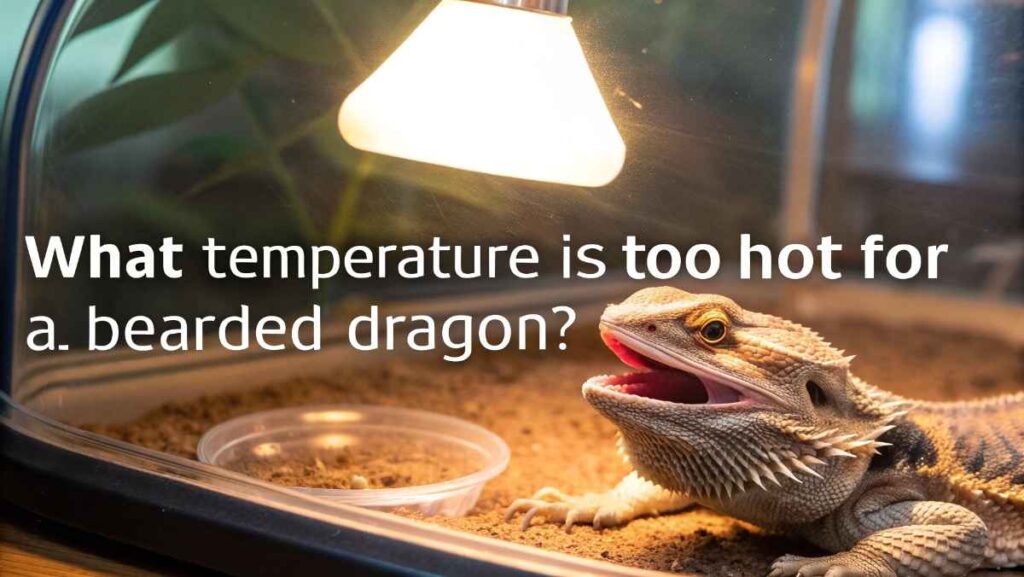
Heat kills faster than cold. If temperatures rise above 115–120°F and your dragon cannot move to a cooler area, the risk becomes serious. At 125–130°F, organ damage can begin. Higher than that can quickly become fatal.
The biggest danger is:
- Heat lamps placed too close
- No thermostat
- Poor airflow
- Glass tanks in direct sunlight
- Leaving a dragon inside a hot car
Even a few hours in extreme heat can cause heat stroke.
At What Temperature Does Heat Stroke Happen?
Heat stroke can begin when body temperature climbs too high and stays high.
If the enclosure air temperature reaches:
- 120°F+ for extended time → High risk
- 130°F+ → Emergency
- 140°F or more → Very likely fatal
Bearded dragons in the wild can move into shade. In a tank, they depend on you.
Signs of Overheating
If your bearded dragon is too hot, you may notice:
- Mouth wide open constantly (not just light basking gaping)
- Black beard (stress signal)
- Rapid breathing
- Weakness
- Glass surfing trying to escape
- Lethargy
- Collapse
If untreated, overheating can lead to:
- Severe dehydration
- Brain swelling
- Organ failure
- Death
How Long Can a Bearded Dragon Survive in Extreme Heat?
There is no exact number because it depends on:
- Humidity
- Age
- Health
- Hydration level
But here’s the truth:
- A dragon left in a car on a hot day can die in less than an hour.
- A tank stuck at 130°F for several hours can become deadly.
Heat damage happens quickly. Cold damage usually takes longer.
What Temperature Is Too Cold for a Bearded Dragon?
Cold kills slowly, but it still kills.
- If temperatures drop below 60°F, digestion slows.
- Below 55°F, the risk increases.
- Below 50°F for long periods, survival becomes difficult.
A short drop at night is fine. Long exposure is not.
Can 50°F Kill a Bearded Dragon?
Yes, it can — if exposure is prolonged.
If your dragon is:
- Healthy
- Well fed
- Adult
It may tolerate short drops to 50°F overnight.
But if the cold lasts many hours or days, problems start:
- Immune system weakens
- Digestion shuts down
- Infection risk rises
- Organs begin to fail
Baby dragons are more sensitive to cold.
Signs of Hypothermia in Bearded Dragons
If your dragon is too cold, you may see:
- Extreme lethargy
- Refusing food
- Weak grip
- Slow movement
- Pale or dull color
- Shallow breathing
Cold stress weakens the immune system. This can lead to respiratory infections, which can become fatal if untreated.
Signs Your Bearded Dragon Is Dying From Temperature Stress
This is the section many owners search for when they are scared.
Watch for:
- No response when touched
- Limp body
- Very dark beard
- Heavy, slow breathing
- Seizure-like shaking
- Eyes closed for long periods
- Unable to stand
If you see these signs, you need immediate action and veterinary care.
What Happens If a Bearded Dragon Overheats?
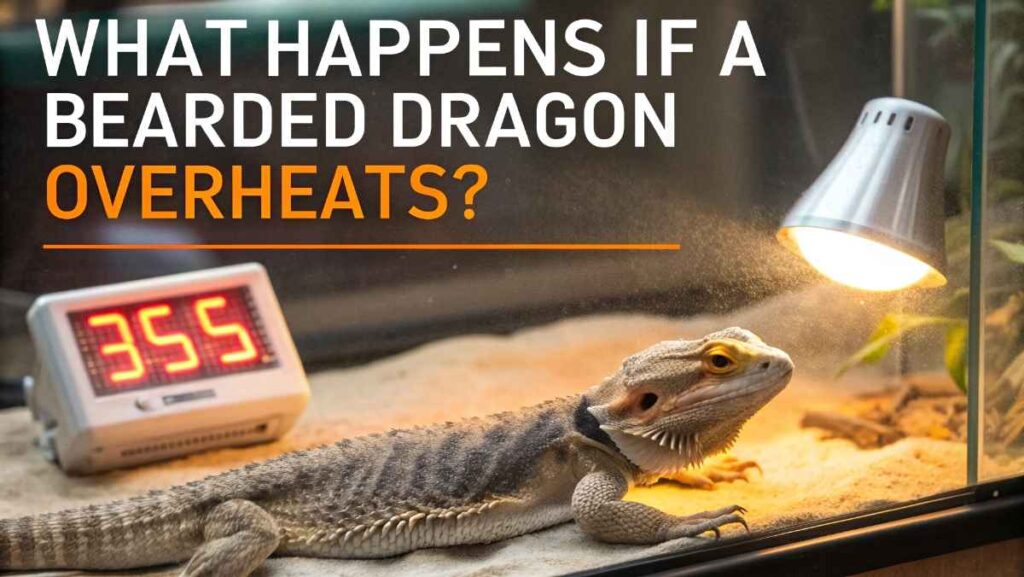
When overheating begins:
- Body temperature rises
- Heart rate increases
- Breathing speeds up
- Organs become stressed
If heat continues:
- Dehydration becomes severe
- Blood thickens
- Brain swelling can occur
- Liver and kidneys may fail
Recovery depends on how fast you cool them down safely.
What Happens If a Bearded Dragon Gets Too Cold?
Cold exposure causes:
- Slow digestion
- Food rotting in the stomach
- Loss of appetite
- Weak immune system
Over time:
- Respiratory infection
- Severe weakness
- Organ failure
Cold rarely kills instantly. It damages slowly.
Can a Bearded Dragon Die Overnight From Temperature Drop?
Yes, but it is uncommon if temperatures stay above 60°F.
The bigger risk is:
- Power outages
- Broken heat lamps
- Winter room temperatures below 50°F
If your house becomes very cold and your dragon cannot warm up for many hours, the risk increases. Backup heat options are important in cold seasons.
Emergency Steps If Temperature Gets Too High
If your dragon overheats:
- Turn off heat source immediately.
- Move dragon to a cooler room (not cold).
- Offer fresh water.
- Lightly mist feet only (not cold shock).
- Contact a reptile vet if symptoms are severe.
Never place them in ice water. Sudden cold can shock their system.
Emergency Steps If Temperature Gets Too Low
If your dragon gets too cold:
- Slowly warm the enclosure.
- Use a ceramic heat emitter if needed.
- Avoid sudden extreme heat.
- Monitor breathing and movement.
Gradual warming is safer than rapid temperature change.
How to Prevent Temperature-Related Death
Prevention is simple when done correctly.
1. Use a Thermostat
A thermostat prevents overheating by turning heat sources on and off automatically.
2. Use Two Thermometers
- One on basking side
- One on cool side
Digital probes are more accurate than stick-on gauges.
3. Use a Temperature Gun
A temp gun checks basking surface temperature accurately.
4. Create a Proper Gradient
Your dragon must be able to move between hot and cool areas at all times.
Proper Heat Setup
A safe heating setup includes:
- Quality heat lamp
- UVB light
- Thermostat
- Temperature probe
- Good ventilation
Never guess temperatures by feeling with your hand. What feels warm to you may be dangerously hot for them.
Temperature Chart – Safe vs Dangerous Zones
| Temperature | Risk Level | Effect |
| 100–110°F (basking) | Safe | Ideal digestion |
| 75–85°F (cool side) | Safe | Comfortable rest |
| 60–70°F (night) | Safe short-term | Normal nighttime drop |
| 55°F | Caution | Slow body function |
| 50°F | Danger if prolonged | Hypothermia risk |
| 120°F | High risk | Heat stress begins |
| 130°F+ | Emergency | Organ damage likely |
| 140°F+ | Extreme danger | Likely fatal |
Common Mistakes That Lead to Death
Many deaths happen because of small mistakes:
- Heat lamp too close
- No thermostat
- Tank in direct sunlight
- Poor airflow
- No temperature monitoring
- Leaving dragon in car
- Ignoring night drops in winter
Most of these are preventable.
Baby vs Adult Temperature Tolerance
Baby dragons:
- Need slightly warmer basking spots
- Dehydrate faster
- Handle cold poorly
Adults:
- Tolerate short night drops
- Still vulnerable to extreme heat
Age matters when assessing danger.
Does Humidity Make Temperature More Dangerous?
Yes. High humidity combined with high heat increases stress. Poor airflow traps hot air inside tanks. Always maintain good ventilation.
Realistic Survival Limits
There is no exact single temperature that instantly kills a bearded dragon.
Death usually happens when:
- Extreme temperature
- No escape area
- Long exposure
- Dehydration
Heat kills fast. Cold kills slow.
Bearded Dragon Too Cold Symptoms
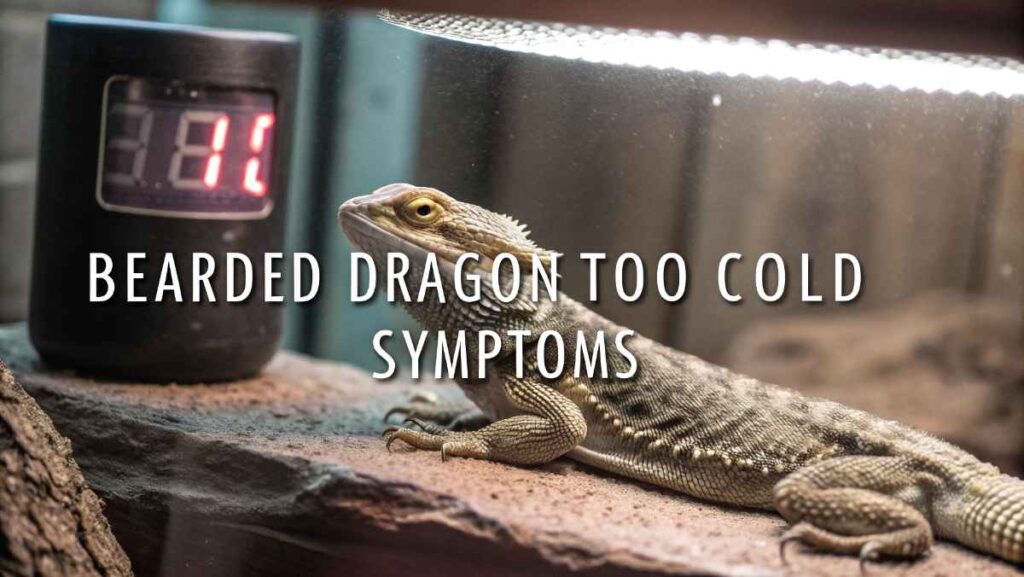
If a bearded dragon is too cold, you may notice weakness, no appetite, slow movement, pale color, and shallow breathing. They may feel cold to the touch and stay still for long periods, showing clear signs of temperature stress.
What Temperature Will Kill A Bearded Dragon Overnight
A bearded dragon can die overnight if temperatures drop below 45–50°F for many hours without warmth. Healthy adults may handle 60°F briefly, but extreme cold or freezing temperatures overnight can become life-threatening, especially without proper heating inside the enclosure.
What Temperature Will Kill A Bearded Dragon In The Winter
In winter, prolonged temperatures below 50°F can be dangerous and possibly fatal. If the enclosure stays very cold for days, the immune system weakens and organs slow down. Keeping nighttime temperatures above 60°F helps prevent serious health problems.
What Temperature Will Kill A Bearded Dragon At Night
Night temperatures below 50°F for long periods can put a bearded dragon at risk. A short drop to 60°F is usually safe, but freezing or near-freezing conditions overnight can lead to hypothermia and possible death.
Juvenile Bearded Dragon Temperature At Night
Juvenile bearded dragons need slightly warmer nights than adults. Try to keep nighttime temperatures around 65–75°F. Babies are more sensitive to cold, and low temperatures can weaken them quickly if proper heating is not provided.
FAQs
What can suddenly kill a bearded dragon?
Sudden death can happen from extreme heat, severe cold, poisoning, untreated infections, dehydration, or serious impaction blocking digestion completely.
What temperature will kill a baby bearded dragon overnight?
Temperatures below 50°F overnight can be deadly for babies, as young dragons lose heat faster and weaken quickly.
Can heat kill a bearded dragon?
Yes, extreme heat above 120–130°F without a cooler area can cause heat stroke and organ failure.
Can bearded dragons survive the cold?
They can handle mild cold briefly, but prolonged temperatures below 55°F can cause illness and possible death.
What is the most common death for bearded dragons?
Common causes include poor heating, metabolic bone disease, impaction, dehydration, and untreated infections over time.
What is fatal to bearded dragons?
Extreme temperatures, toxic foods, dehydration, severe infections, and improper lighting can all become fatal.
What are the signs of a bearded dragon dying?
Signs include extreme weakness, no response, dark beard, shallow breathing, closed eyes, and inability to move.
What food kills bearded dragons?
Toxic foods like avocado, fireflies, rhubarb, and insects with pesticides can seriously harm or kill them.
What night temperatures can actually KILL bearded dragons?
Prolonged nighttime temperatures below 45–50°F can become life-threatening, especially for babies or sick dragons.
Is it safe to take bearded dragon outside in cold weather?
Short outdoor time is fine above 65°F, but cold weather below 60°F can stress them quickly.
Conclusion
Bearded dragons are strong reptiles, but they cannot survive extreme temperatures for long. Heat above 120–130°F without a cooler area can quickly become deadly, while prolonged cold below 50°F can slowly shut their body down. The key is not just the number on the thermometer, but how long your dragon is exposed to it.
The good news is that temperature-related deaths are almost always preventable. Use a thermostat, check temperatures daily, and always provide a proper heat gradient. When their environment stays stable and safe, your bearded dragon can live a long, healthy life.