





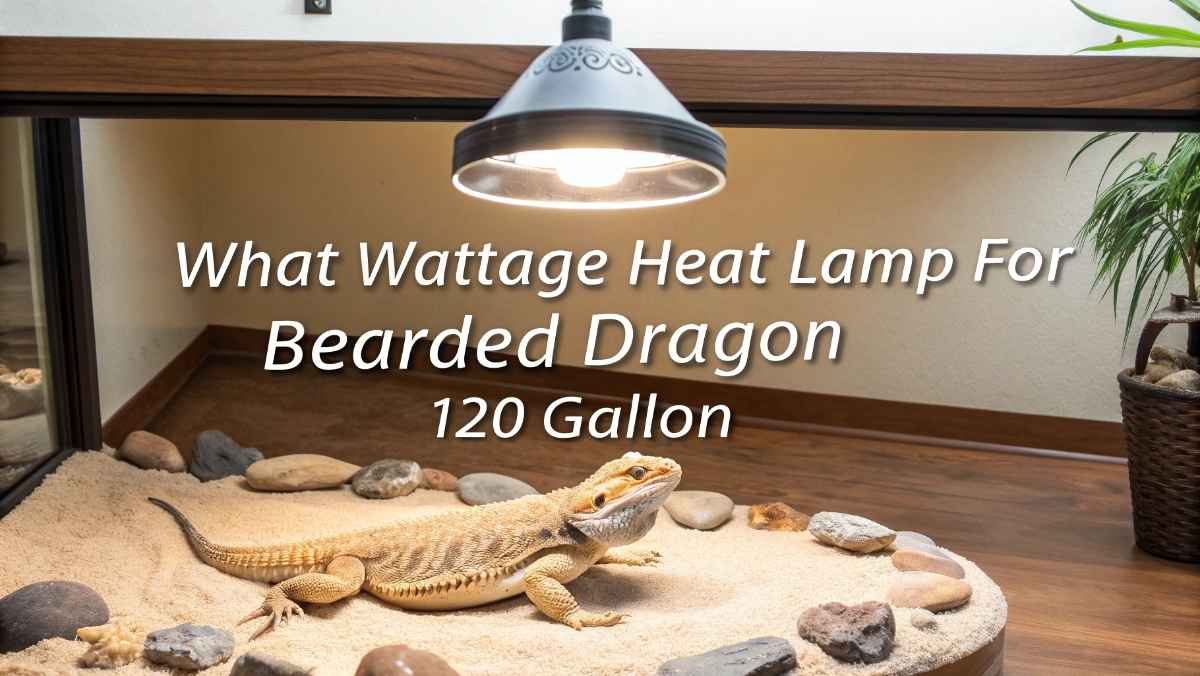
A 120 gallon enclosure is a great home for a bearded dragon because it gives the reptile plenty of space to move, climb, and explore. However, a large tank also needs proper heating. Many owners ask what wattage heat lamp is best for this size enclosure.
In most cases, a 100-watt to 150-watt basking heat lamp works well for a 120 gallon bearded dragon tank. The exact wattage depends on the tank height, room temperature, and the distance between the lamp and the basking spot. The goal is to create a warm basking area while also keeping a cooler side in the enclosure.
Proper heating is very important for bearded dragons. These reptiles depend on external heat to digest food, stay active, and remain healthy.
What Wattage Heat Lamp for a 120 Gallon Bearded Dragon Tank?
For a 120 gallon tank, most owners use a 100W to 150W heat lamp. This wattage range usually produces enough heat to reach the correct basking temperature.
A 120 gallon enclosure is larger than many beginner tanks, so weaker bulbs may not provide enough heat. A stronger bulb helps create a warm basking spot where the dragon can regulate its body temperature.
Many setups use:
- 100 watt basking bulb for warmer rooms
- 125 watt bulb for normal indoor temperatures
- 150 watt bulb for cooler homes or taller tanks
The important thing is not the wattage itself but the temperature at the basking spot. Always check the temperature with a thermometer instead of guessing.
Every home is different, so you may need to test different bulbs before finding the best one.
Ideal Basking Temperature for Bearded Dragons
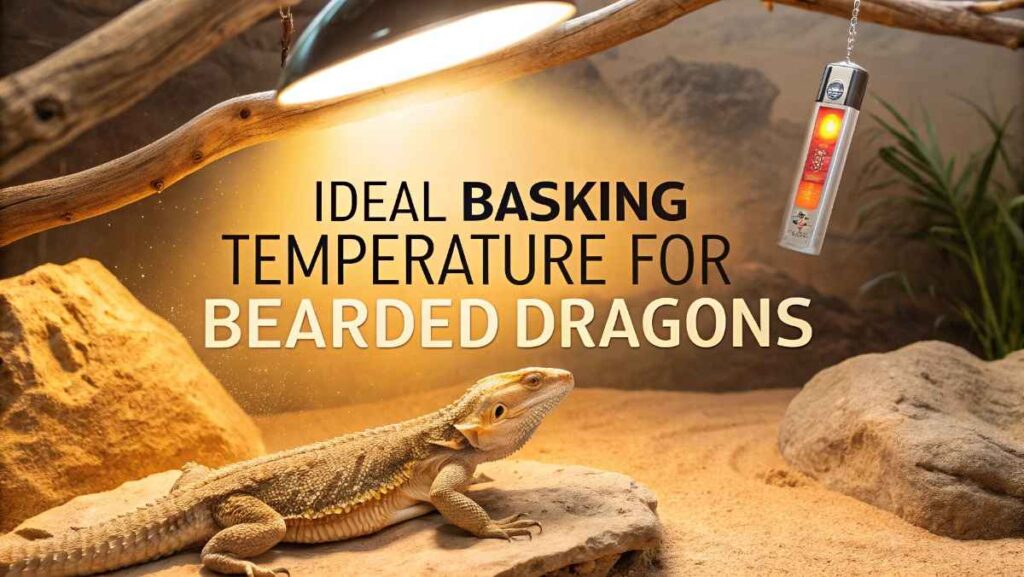
The heat lamp should create a basking area where the dragon can warm its body properly. Bearded dragons come from hot desert environments, so they need strong heat during the day.
The recommended temperatures are:
Basking spot: 105°F to 115°F
Warm side of the tank: 90°F to 95°F
Cool side: 75°F to 85°F
This difference between warm and cool areas is called a temperature gradient. It allows the bearded dragon to move around and control its body temperature.
If the tank is too cold, the dragon may stop eating or become slow and weak. If it is too hot, the dragon may become stressed and try to hide.
Maintaining the right temperature keeps your reptile comfortable and healthy.
Factors That Affect Heat Lamp Wattage
Several things can change how much heat your lamp produces inside the enclosure.
Tank Size and Height
A 120 gallon tank is usually around 4 feet long and 2 feet tall. Taller tanks often need stronger bulbs because the heat must travel farther to reach the basking spot.
If the basking platform is close to the lamp, a lower wattage bulb might work.
Room Temperature
The temperature of the room also affects heating. If the room stays warm during the day, a 100 watt bulb may be enough.
If the room is cooler, you may need a 150 watt bulb to reach the proper basking temperature.
Also Read: What Wattage Heat Lamp For Bearded Dragon 40 Gallon
Distance from the Basking Spot
The farther the bulb is from the basking area, the less heat the surface receives. Adjusting the height of the lamp can sometimes fix heating problems without changing the bulb.
Many owners raise or lower the basking platform until the temperature is correct.
Screen Top vs Solid Top
Many reptile tanks have a mesh screen lid. This allows heat to escape easily, which may require a stronger heat bulb.
A solid top enclosure keeps heat inside better, so a lower wattage bulb may work.
Best Heat Lamp Types for a 120 Gallon Tank
Not all heat bulbs work the same way. Some produce better heat and light for reptiles.
Halogen Basking Bulbs
Halogen bulbs are one of the best choices for bearded dragons. They produce strong, bright heat that is similar to natural sunlight.
These bulbs heat surfaces quickly and create a good basking area.
Reptile Basking Spot Lamps
Many reptile brands sell special basking lamps made for reptiles. These bulbs focus heat on one area of the enclosure.
They are easy to find in pet stores and are commonly used by reptile keepers.
PAR38 Flood Bulbs
PAR38 flood bulbs are also popular for reptile enclosures. They spread heat over a wider area, which can help warm large tanks evenly.
Some owners prefer these bulbs because they create a natural basking zone. No matter which bulb you choose, make sure the lamp fixture can handle the wattage safely.
How to Set Up a Heat Lamp in a 120 Gallon Enclosure
Proper placement of the heat lamp is just as important as the wattage. Place the heat lamp above one side of the tank, not in the center. This creates the warm and cool sides needed for a temperature gradient.
Under the lamp, add a basking platform, such as:
- A large rock
- A piece of driftwood
- A reptile basking platform
The dragon will climb onto this surface to warm up. Most heat lamps are placed 8 to 12 inches above the basking area, depending on the bulb strength. Always secure the lamp so it cannot fall into the enclosure.
Do You Need More Than One Heat Lamp?
Sometimes a single bulb is not enough for a large enclosure. This can happen if the tank is very wide or the room is cold.
In these situations, owners sometimes use two heat lamps. For example:
- One 100 watt basking bulb
- One 75 watt supporting bulb
This setup can help spread heat more evenly across the enclosure. However, many 120 gallon tanks work perfectly with one strong basking lamp. Always check temperatures carefully before adding more bulbs.
Common Heat Lamp Wattage Mistakes

Many new reptile owners make simple mistakes when setting up heating.
Using a Bulb That Is Too Weak
Small bulbs may not produce enough heat in a large enclosure. The dragon may struggle to warm its body properly.
Overheating the Tank
A bulb that is too strong can make the basking spot dangerously hot. This may cause stress or burns.
Not Measuring the Temperature
One of the biggest mistakes is guessing the temperature instead of measuring it. Without proper tools, it is impossible to know if the heating is correct. Always test the basking surface with a thermometer.
Must Read: How Big Do Bearded Dragons Get? – Age, Size Chart & Facts!
Tools to Check Bearded Dragon Temperature
Temperature tools help ensure the enclosure stays safe and comfortable.
Digital Probe Thermometer
A digital thermometer with a probe can measure the temperature directly on the basking surface.
It is more accurate than simple stick-on thermometers.
Infrared Temperature Gun
An infrared temperature gun is one of the best tools for reptile keepers. It can quickly measure the surface temperature of rocks, branches, and basking spots.
Many owners use this tool daily.
Thermostat or Dimmer
A thermostat or dimmer switch helps control the heat lamp. If the temperature rises too high, the thermostat can reduce the power to the bulb.
This keeps the enclosure temperature stable.
Complete Lighting Setup for a 120 Gallon Tank
Bearded dragons need more than just heat. They also require proper lighting.
A healthy setup usually includes:
Heat lamp: 100W to 150W basking bulb
UVB light: T5 high-output UVB tube
Day cycle: 12 to 14 hours of light each day
The UVB light is essential because it helps the dragon produce vitamin D3 and absorb calcium. Without UVB lighting, reptiles can develop serious health problems.
The UVB tube should run across a large part of the enclosure so the dragon receives proper exposure.
What Wattage Heat Lamp For Bearded Dragon 120 Gallon Diy
For a DIY 120-gallon bearded dragon enclosure, most owners use a 100–150 watt basking heat lamp. The goal is to reach a basking temperature around 105–115°F. Always test temperatures with a thermometer and adjust bulb height if needed.
What Wattage Heat Lamp For Bearded Dragon 40 Gallon
A 40-gallon bearded dragon tank usually works well with a 75–100 watt heat lamp. This wattage normally creates the correct basking temperature. Room temperature and tank height can affect heat, so always check the basking spot with a thermometer.
What Wattage Heat Lamp For Bearded Dragon 20 Gallon
In a 20-gallon tank, a 50–75 watt basking bulb is often enough to heat the enclosure. The basking area should reach about 105°F for proper digestion. Always watch the temperature carefully because small tanks heat up quickly.
What Wattage Heat Lamp For Bearded Dragon 50 Gallon
A 50-gallon enclosure usually needs a 75–100 watt basking heat lamp. This helps create a warm basking spot and a cooler side inside the tank. Always measure the basking surface temperature to make sure the heat is safe.
What Wattage Heat Lamp For Bearded Dragon 75 Gallon
For a 75-gallon tank, many owners use a 100–125 watt basking bulb. This size enclosure needs strong heat to reach proper basking temperatures. Adjust the lamp distance or wattage until the basking spot stays between 105°F and 110°F.
What Watt Basking Bulb For 120 Gallon Tank
A 120-gallon bearded dragon tank usually needs a 100–150 watt basking bulb. Larger tanks require stronger heat to warm the basking area properly. Always create a temperature gradient so the dragon can move between warm and cooler areas.
150 Watt Basking Bulb For Bearded Dragon
A 150 watt basking bulb can work well for large bearded dragon tanks. It helps create strong heat for the basking spot. However, always check temperatures carefully because powerful bulbs can overheat small enclosures if placed too close.
What Watt Uvb Bulb For Bearded Dragon
Bearded dragons usually need a strong UVB tube light instead of a watt-based bulb. Many keepers use a T5 10.0 or 12% UVB tube that runs across the tank. UVB lighting helps dragons absorb calcium and stay healthy.
FAQs
What size heat lamp for 120 gallon tank?
A 120 gallon tank usually needs a strong basking heat lamp around 100 to 150 watts to reach proper basking temperatures safely.
How many watt heater for 120 gallon tank?
Most 120 gallon bearded dragon tanks use a 100–150 watt heat lamp. Always check basking temperature to keep the dragon comfortable.
How to heat a 120 gallon tank for bearded dragon?
Use a 100–150 watt basking lamp on one side, add UVB lighting, and create a warm basking area with cooler side.
What wattage heat lamp for a bearded dragon?
Most bearded dragon tanks use a 75–150 watt heat lamp depending on tank size, room temperature, and basking distance.
Is a 150 watt bulb too much for a bearded dragon?
A 150 watt bulb is safe for large tanks if temperatures stay correct. Always measure basking heat to avoid overheating.
Can a baby bearded dragon live in a 120 gallon tank?
Yes, a baby bearded dragon can live in a 120 gallon tank if heating, lighting, and hiding areas are set properly.
What wattage heater for 125 gallon tank?
A 125 gallon tank usually needs a 100–150 watt basking heat lamp to create a warm basking area for reptiles.
How many heat bulbs are needed for a 120 gallon tank?
Most 120 gallon tanks use one strong basking bulb, but some setups use two bulbs to spread heat evenly.
What kind of heat bulb/watt should I use for my 120 gallon tank?
Use a halogen basking bulb around 100–150 watts. This produces strong heat and helps create a proper basking temperature.
Will a 150 watt heat lamp be enough for a 120 gallon enclosure?
Yes, a 150 watt heat lamp is usually enough for a 120 gallon enclosure if the basking temperature reaches proper levels.
Conclusion
Choosing the correct heat lamp wattage is an important part of setting up a healthy bearded dragon enclosure. For a 120 gallon tank, most setups work best with a 100 to 150 watt basking bulb.
The goal is to create a basking spot between 105°F and 115°F while keeping the other side of the tank cooler. This temperature gradient allows the dragon to regulate its body heat naturally.
Always measure temperatures using a thermometer and adjust the lamp height or wattage if needed. With proper heating, lighting, and care, your bearded dragon can stay active, healthy, and comfortable in its large enclosure.